Review
Genre and Mood
Pomplamoose turn Harder, Better, Faster, Stronger, originally by Daft Punk, into a live-band funk-pop performance. It keeps the original’s energy and its famous list of words, but trades the robot voices for human ones; the result is playful rather than mechanical.
Song Summary
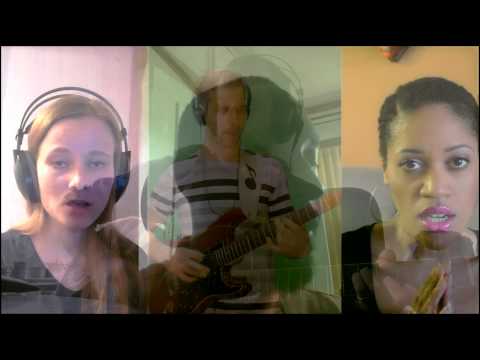
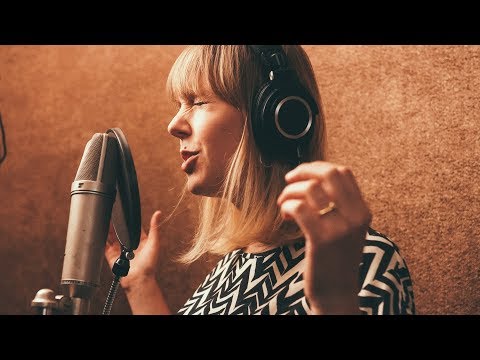
Daft Punk’s 2001 track is built on a bouncy keyboard riff sampled from Edwin Birdsong’s 1979 funk song “Cola Bottle Baby”, with vocoded vocals chanting the title words. Pomplamoose replay all of it by hand: Jack Conte on keys, Brian Green on guitar, Nick Campbell on bass, Julian Allen on drums and Dave Mackay on synthesizer, with Nataly Dawn singing lead and Nahneen Kula on background vocals. Recorded at Band House Studios in Los Angeles and produced by Ben Rose, the video was published in October 2019 and later collected on the band’s album of Daft Punk covers, Daft Pomp.
Musical Breakdown
Intro: Catchy Start
The band plays the riff Daft Punk sampled, keys and bass together, establishing the groove the original built from a loop.
Verse 1: Vocal Harmony
Nataly Dawn sings the title words and their companions, the list of commands that Daft Punk delivered through a vocoder, with a clear human voice.
Chorus: Energetic Hook
Lead and background vocals stack up in harmony on the title phrase, the original’s hook made warm.
Bridge: Instrumental Interlude
An instrumental passage gives the players room, synthesizer and guitar trading lines over the rhythm section.
Climax: Full Energy
The final section brings vocals and instruments together at full strength.
Outro: Playful Fade
The arrangement winds down, the riff the last thing standing.
Concepts in Focus
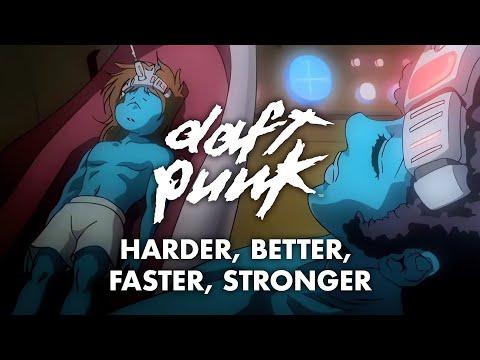
This is a cover version that changes the medium rather than the song. Daft Punk’s original was assembled in the studio from a sample and machines; Pomplamoose keep its riff, its words and its structure, and rebuild it with a band. Compare it with Daft Punk – Harder, Better, Faster, Stronger to hear how much of the song’s identity survives the move from machine to hands.
The biggest change is in the voices. Where the original uses a vocoder to make the words sound robotic, the cover uses vocal harmony: Nataly Dawn’s lead with Nahneen Kula’s background vocals, so the same commands sound like people singing together rather than a machine giving orders.
The music video follows the VideoSong format Pomplamoose made their trademark, defined by two rules: what you see is what you hear, so no miming, and if you hear it, at some point you see it, so no hidden sounds. Every part of the recording appears on screen being played.
Artistic Context
Pomplamoose are Jack Conte, a multi-instrumentalist, and Nataly Dawn, a singer-songwriter and bassist, a duo formed in 2008 in Corte Madera, California, who built their audience on YouTube with VideoSongs, covers and originals. Daft Punk’s original was released by Virgin on 13 October 2001 as the fourth single from Discovery; its live version from Alive 2007 won a Grammy, and Kanye West sampled it for “Stronger”.
Cultural Impact
Pomplamoose’s Daft Punk covers became popular enough that the band gathered them on one album, Daft Pomp, with a limited vinyl edition. Their version of Harder, Better, Faster, Stronger shows that a track famous for sounding like a machine can be played, and enjoyed, by a room full of people.