Review
Genre and Mood
Clawfinger hit hard with Biggest & The Best, blending rap metal with industrial rock. Its aggression is aimed at a target: the song criticises arrogance and people who see themselves as almighty.
Song Summary
“Biggest & The Best” is Clawfinger at their most direct: heavy guitar riffs, rapped verses and programmed rhythm, all in service of a lyric about self-importance. The narrator’s boasts are the song’s own hook, so the arrogance it attacks is performed, loudly, until it sounds ridiculous.
Musical Breakdown
Intro: Powerful Kick-off
The song opens with a punchy, distorted guitar riff and driving drums, establishing the high-energy tone straight away.
Verse 1: Lyrical Provocation
Zak Tell’s rapped delivery takes centre stage, sneering and urgent. The words come first; the band locks in behind him.
Chorus: Anthemic Energy
The chorus turns the title into a shouted boast, the self-glorification the song is mocking.
Bridge: Instrumental Break
Midway through, guitars and electronic elements are layered into an instrumental break, the industrial side of the band’s sound.
Verse 2 and Outro: Continuing the Critique
The second verse keeps up the attack, and the song drives on to a hard finish.
Concepts in Focus
The engine of the song is the riff: a short, repeated guitar figure that does the job a melody would do in a pop song. In rap metal the vocal is mostly rhythm, so the riff is what you hum afterwards.
Those guitars are heavily treated with distortion, which clips and saturates the signal until a single chord sounds thick and aggressive. Combined with the band’s programming and keyboards, it gives the track its industrial weight; the album credits list programming by Jocke Skog and Bård Torstensen alongside the guitars.
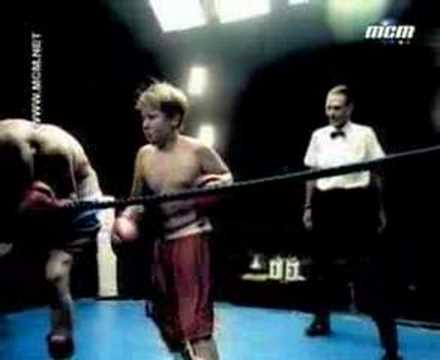
The music video makes the critique concrete. It shows Zak Tell competing against children at basketball, American football and boxing, and winning every time: a picture of someone who must be the biggest and the best even when the contest is absurd. Compare the way Sleaford Mods – Tweet Tweet Tweet uses a deadpan, confrontational voice to puncture a target.
Artistic Context
Clawfinger, formed in Stockholm by Swedish and Norwegian musicians, were among the European pioneers of rap metal and known for addressing social and political issues head-on. “Biggest & The Best” was the lead single from their third album, Clawfinger, released on 29 September 1997 through WEA and MVG and produced by the band with Peter Reardon. The members could not agree on a title, so the album took the band’s name; Zak Tell later said he had proposed “Third Time Lucky”, which fits the revolver cylinder with a single bullet on the cover.
Cultural Impact
The single made a brief appearance at number 94 on the UK Singles Chart in December 1997. It stayed in the band’s live set for years: a live version appeared on the 2003 single “Recipe for Hate”. Its message has not dated, because the type it mocks has not gone away.