Review
Genre and Mood
Cardi B and Megan Thee Stallion made WAP one of the most talked-about records of 2020. It is hip-hop in its trap and dirty rap tradition: assertive, explicit and playful, celebrating female sexuality in a way that is unapologetic by design.
Song Summary
“WAP” sets two very different rappers side by side over almost nothing. The beat, from the producers Ayo and Keyz, is drum programming and a throbbing bass line, plus a single looped vocal chant sampled from Frank Ski’s 1993 Baltimore club record Whores in This House. Everything else is voice: Cardi B and Megan boast about their desires through vivid, outlandish metaphors, and the minimal backing leaves the words and the personalities in front.
Musical Breakdown
Intro: Setting the Tone
The track opens on the looped chant and the bare beat. Cardi B comes in low and throaty, as if leaning close, and the provocation starts with the first line.
Verse 1: Cardi B’s Assertion
Cardi B’s flow is a steady, staccato bark in the style of her early mixtapes, paced so that each line lands clearly. The beat stays out of her way.
Chorus: The Hook
The hook is built from the sampled chant and the title, repeated until it becomes a slogan. It is the most recognisable part of the song.
Verse 2: Megan Thee Stallion’s Power
Megan Thee Stallion takes over with a nimble, rapid-fire flow, a direct contrast to Cardi’s measured delivery, and her lines are among the most quoted of the song.
Bridge: Energetic Breakdown
The music briefly breaks before Cardi returns; in the video, this is the moment Kylie Jenner walks down the mansion hallway.
Outro: A Bold Conclusion
The two voices trade lines to the end over the same loop, and the song finishes without ever adding anything to the beat.
Concepts in Focus
WAP is a textbook case of sampling. The chant comes from a Baltimore club single from 1993, a regional dance music that is fast, chopped and built on chants. Moved to a slow hip-hop beat, it becomes menacing and funny at once. The sample also shows the business side: its voice, Al “T” McLaran, had not been credited as a writer on the original, and only after WAP came out did he and Frank Ski agree that he would share in its royalties.
The chant is used as a loop, repeated about 80 times, sometimes pitched up. Change comes not from new parts but from small alterations of the same one, and from the rappers on top. Listen for how little the backing changes from beginning to end.
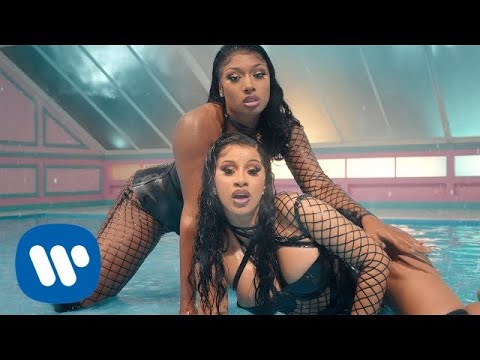
The credit line, Cardi B featuring Megan Thee Stallion, matters too. A <a href=“https://korczis.github.io/sonic-playground/concept/featured-artist/” class=“concept-link font-medium text-primary-700 underline decoration-dotted underline-offset-4 hover:decoration-solid dark:text-primary-400” data-concept=“featured-artist” title=“A guest performer credited on another artist’s track, usually as “feat.”: a rapper’s verse, a singer’s hook or a second voice. Features bring together different styles and audiences and are central to hip-hop, R&B and dance music.“>featured artist usually brings a single verse; here Megan is an equal partner, and the record became the first female rap collaboration to debut at number one on the Billboard Hot 100. Its music video, directed by Colin Tilley, turned the song into an event: a colourful mansion with practical sets, snakes, leopards and cameos from Kylie Jenner, Normani, Rosalía and others, with a censored version of the track.
Visual Companion
The video was shot in Los Angeles in July 2020, just before new COVID-19 restrictions, with choreography by JaQuel Knight. Colin Tilley gave it a distorted look inspired by Tim Burton and Dr. Seuss, and Cardi B estimated its budget at about a million dollars, more than $100,000 of it on COVID testing. It drew over 26 million views in its first day, a record for an all-female collaboration on YouTube.
Cultural Impact
“WAP” was released on August 7, 2020, through Atlantic Records and became the first number-one single on the new Billboard Global 200, with the largest opening streaming week for a song in US history at the time. Critics were enthusiastic, the Los Angeles Times calling it a sex-positive triumph, while conservative politicians and pundits attacked its lyrics, and that controversy only spread it further. Its performance at the 63rd Grammy Awards drew more than 1,000 complaints to the FCC. Originally planned as the lead single of Cardi B’s second album, it finally closed Am I the Drama? in 2025. Whatever you make of it, it is impossible to ignore.


