Review

Genre and Mood
Fatboy Slim made Sunset (Bird of Prey) one of his gentlest hits. It comes from the big beat era but leans towards slow-building, sunlit dance music, uplifting and slightly hazy, more a long sunset than a party peak. The page’s old title, “Bird of Pray”, is a misspelling; the single is “Sunset (Bird of Prey)”.
Song Summary
The track is built around Jim Morrison’s voice, sampled from the Doors’ “Bird of Prey”. Norman Cook surrounds it with electronic layers that rise slowly, so the dead singer’s words seem to float over a dance floor he never knew. The album version runs 6:49, and the method holds throughout: one haunting vocal phrase, repeated and lifted by everything around it.
Musical Breakdown
Intro: Captivating Start
The track opens patiently, laying down rhythm and texture before the voice enters.
Verse 1: Exploring Themes
Morrison’s sampled voice arrives, singing of a bird of prey and of flying: images of escape that the production lets hang in the air.
Chorus: Anthem of Liberation
The vocal phrase returns over fuller production. Instead of a conventional chorus, the hook is the repetition of Morrison’s line against brighter layers.
Bridge: Instrumental Interlude
An instrumental stretch gives the production room on its own, before the voice comes back.
Verse 2 and Outro: Continuing the Journey
The final section brings the layers to their fullest and then lets the track fade like the light it is named after.
Concepts in Focus
Sunset (Bird of Prey) is built on sampling. The vocal is Jim Morrison’s, taken from the Doors’ “Bird of Prey” and placed into a new arrangement almost thirty years after his death in 1971. Because the sample carries a melody and words, the writing credit is shared: Norman Cook is listed alongside Morrison, Robby Krieger, Ray Manzarek and John Densmore.
The track is shaped as a long build-up. Rather than verses and choruses, it repeats the vocal phrase while adding layers around it, so the intensity grows by accumulation; the same patient method runs through Nina Simone – Sinnerman (Felix Da Housecat’s Heavenly House Mix), which also builds on the voice of a 1960s legend.
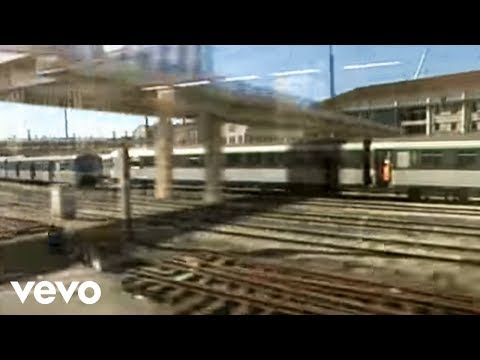
The music video, directed by Blue Source (Rob Leggatt and Leigh Marling), is set in 1964. It opens with Lyndon B. Johnson’s “Daisy” campaign advert, and follows a US Air Force pilot (Robert Jezek) flying a Hawker Hunter named the “Bird of Prey”, who takes a drug, imagines flying, ejects and parachutes down before the hallucination ends. Details such as the word “MKULTRA” on screen point to Cold War drug experiments. It was filmed at Duxford Aerodrome with a real Hunter repainted in USAF colours.
Symbolism of the YF-118G
Earlier versions of this page read the song through the YF-118G, Boeing’s experimental “Bird of Prey” stealth aircraft. Neither the song nor the video refers to it: the aircraft in the video is a British-built Hawker Hunter, and the title comes from the Doors recording that Cook sampled. The shared name is a coincidence.
What the video does do with flight is more interesting. It sets the dream of flying free, Morrison’s image of a bird of prey, against the Cold War of 1964: nuclear fear in the opening advert, a military jet, and a drug-induced escape that ends with the pilot back on the ground. Freedom here is a hallucination, and the song’s dreamy lift becomes its soundtrack.
Artistic Context
Fatboy Slim is the stage name of Norman Cook, the Brighton producer whose sample-heavy big beat defined late-1990s dance music. Sunset (Bird of Prey) was released on 16 October 2000 on Skint Records (Astralwerks in the US) as a single from his third album, Halfway Between the Gutter and the Stars, and produced by Cook himself. According to Wikipedia, an early version of the track, credited as “Yum Yum Head Food”, had already appeared on a 1995 US compilation of Southern Fried Records material.
Cultural Impact
The single reached number 9 on the UK Singles Chart and number 4 on the UK Indie chart, and charted across Europe. It showed a softer side of an artist best known for party anthems, and it remains one of the best-known uses of a Jim Morrison vocal outside the Doors’ own records.