Review

Genre and Mood
Caravan Palace made Lone Digger the calling card of their third album and of electro-swing at large: the swing-era jazz of the 1930s, with its violin, brass and bouncing rhythm, rebuilt on top of club drums and synthesizers. The mood is vibrant, playful and energetic, a party track that looks back eighty years and forward to the dance floor at once.
Song Summary
Lone Digger is short, 3:50, and built for movement. The album credits show how the band works: all five members program and play synths, and on top of that each brings an acoustic colour, Arnaud Vial on guitar, Antoine Toustou on trombone, Hugues Payen on violin, Charles Delaporte on bass and Paul-Marie Barbier on piano, keyboards and vibraphone, with Zoé Colotis singing. The memorable detail is the friction between those live jazz sounds and the hard, straight electronic beat beneath them.
Musical Breakdown
Intro: Swinging Start
The song opens with a swing figure set against a modern beat, announcing the band’s formula in a few bars.
Verse 1: Engaging Vocals
Colotis’s vocal enters, rhythmic and playful, riding the groove as much as carrying a melody.
Chorus: Danceable Hook
The chorus is built around a short, repeated hook that the arrangement leans into, jazz colours and electronic drums hitting together.
Bridge: Instrumental Showcase
Midway through, the instruments take over, with the acoustic jazz parts and the electronics trading space.
Climax: Full-Scale Party
Towards the end the layers stack up and the beat drives harder, the track at its fullest.
Outro: Spirited Conclusion
The track closes by returning to its opening material, a tidy ending for a song designed around repetition.
Concepts in Focus
The core of electro-swing is swing: the rhythmic feel of 1930s jazz in which beats are divided long-short rather than evenly, so the music seems to bounce. Caravan Palace name Django Reinhardt and Lionel Hampton among their influences, and you can hear that tradition in the phrasing of the jazz parts. What makes it electro-swing is what happens underneath: programmed drums and bass that are much straighter and heavier than any swing band’s, so the old lilt rides on a modern pulse.
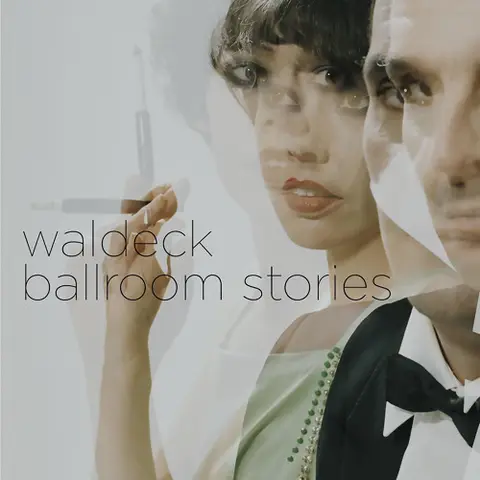
Like most dance-floor pop, the track is organised around a hook, a short phrase repeated until it becomes the thing you remember. Here the hook is as much rhythm as melody, which suits a band whose other influences, Daft Punk and Vitalic, come from French electronic music. Compare Waldeck – Memories, another electro-swing record that leans on vintage jazz but in a slower, more nostalgic register.
For most listeners, though, Lone Digger is its music video. Directed by Double Ninja and produced by Cumulus, the animation shows a violent brawl in a club staffed and visited by anthropomorphic animals. Released on 12 November 2015, it passed 400 million views on YouTube, far beyond the usual audience for a French jazz-electronic band, and turned the song into a global calling card.
Artistic Context
Caravan Palace are a Paris electro-swing band, active since 2008, who began as a trio recruited to compose a soundtrack for a silent adult film. Wagram signed them and released their 2008 debut, followed by Panic in 2012. Lone Digger was released on 15 September 2015 as the second single from their third album, <|°_°|>, also known as Robot Face, written and produced by the band at Studio Trévise in Paris and released on Café de la Danse under licence to Mvka.
Cultural Impact
Lone Digger has become a staple of electro-swing and arguably its best-known track. It was certified platinum in the United States (RIAA, one million units) and in Poland (ZPAV), and it was later used in Disney’s 2022 animated film Strange World. For many people it was the first time they heard swing on a dance floor, which makes it a good starting point for exploring both the genre and the jazz it borrows from.