Review
Genre and Mood
Pharrell Williams wrote Happy to be exactly what its title says, and it works. It is pop with a soul heart and a funk spine, a retro groove dressed in modern production. The feelings are simple and total: joyful, uplifting, feel-good from the first handclap.
Song Summary
Written for the soundtrack of the animated film Despicable Me 2, “Happy” is a song about a mood so strong nothing can dent it. Pharrell had first written it for CeeLo Green, whose label passed because he was making a Christmas album. The arrangement is deliberately light: programmed drums, a bouncing bass, crisp handclaps, a few keyboard chords and Pharrell’s airy falsetto, which critics compared to Curtis Mayfield, with layered backing voices answering him like a gospel congregation. Its genius is economy; there is nothing in it that does not make you want to move.
Musical Breakdown
The song runs on a loop of call and response, building warmth rather than volume.
Intro
The bass and claps set an uptempo strut before a word is sung, and the groove is already infectious.
Verse 1
Pharrell floats over the beat with easy, playful phrasing, describing a feeling too good to be brought down. Backing voices hum and coo around him.
Chorus
“Because I’m happy” lands with a wall of harmonised voices and the instruction to clap along. It is impossible to resist, which is the whole point.
Bridge
The band drops away and the song becomes almost a cappella, voices and claps trading the line about not being brought down, a gospel-style breakdown in miniature.
Climax
The full groove returns and the final choruses stack the backing vocals higher, the room-without-a-roof feeling at its peak.
Outro
The hook repeats until it fades, leaving the bassline bouncing in your head long after.
Concepts in Focus
Pharrell sings the whole song in falsetto, the light upper register above a man’s normal voice. Falsetto has a long history in soul, from Curtis Mayfield onward, and it makes a voice sound weightless and unguarded, which is exactly the emotion of the lyric. Hear the same voice on Daft Punk – Get Lucky (Radio Edit), released the same year.
The song is built on call and response, a practice that runs from African music through gospel, blues and soul. Pharrell states a line, the backing singers answer, and in the bridge the exchange is almost all that is left. It is why the song feels communal even on headphones: it is written for a crowd to join in.
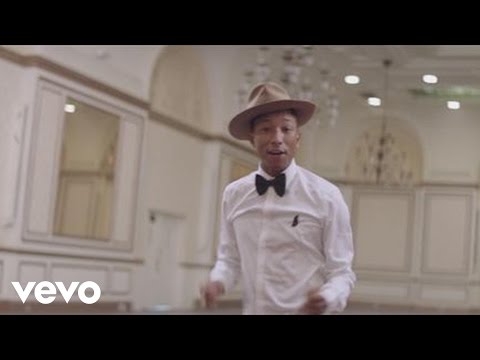
The music video, directed by We Are From LA, was billed as the world’s first 24-hour music video, with people dancing through Los Angeles around the clock, and it held the Guinness record for the longest music video until 2020. It won the Grammy for Best Music Video and inspired more than 1,500 tribute videos made by fans around the world. Notice, too, that the song is in F minor at a brisk 160 beats per minute: speed, rhythm and voice can outweigh the old idea that minor keys are sad.
Artistic Context
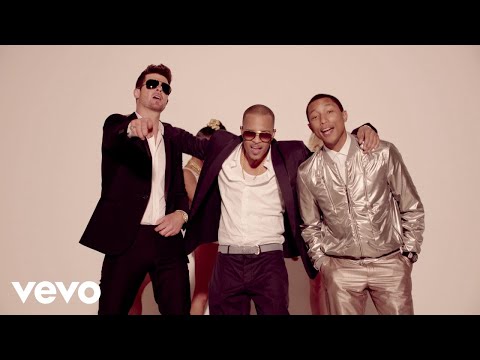
By 2013 Pharrell was already one of pop’s most sought-after producers, half of The Neptunes and fresh from his parts in Daft Punk’s “Get Lucky” and Robin Thicke’s “Blurred Lines”. “Happy” first appeared on the Despicable Me 2 soundtrack in July 2013, was released as a single on 21 November 2013 by Back Lot Music under licence to Columbia, and became the lead single of his second solo album, G I R L, in 2014. He wrote and produced it himself.
Impact and Reception
“Happy” was the best-selling song of 2014 in both the US and the UK: it topped the Billboard Hot 100 for ten weeks and reached number one in the UK and more than twenty other countries. It was nominated for the Academy Award for Best Original Song, a live performance won the Grammy for Best Pop Solo Performance, and the video won Best Music Video. Its reach was such that the arrest in 2014 of Iranian fans who had made their own Happy video became international news, and Pharrell spoke out against it. It is here because sometimes a song should simply make you smile. Press play, and clap along.