Review
Genre and Mood
Jain’s “Makeba” is a celebration of African rhythms and pop melody, an energetic, uplifting song that sounds as if it were made for a crowd to sing back.
Song Summary
“Makeba” pays homage to Miriam Makeba, the South African singer and anti-apartheid activist known as Mama Africa. The lyric speaks to her directly, about wanting to hear her breath and see her sing and fight, and calls her the real beauty of human rights. Musically, it is built on a refrain that samples Hamilton Bohannon’s 1978 disco-funk track Me and the Gang, programmed drums and keyboards played by Jain herself, and a bright, catchy vocal that made it a hit.
Musical Breakdown
Intro: Rhythmic Pulse
The song opens on its rhythm and its refrain, setting a vibrant, danceable tone from the first bars.
Build-up: Layered Grooves
Programmed beats and bass build the groove, with keyboards, guitar and a trombone filling out a modern pop arrangement.
Main Section: Hook and Chorus
The main section is driven by the chorus, with Jain calling out the name Makeba in a call-and-response style that invites the listener to answer.
Bridge: Playful Experimentation
The verses and chorus alternate with breaks in the arrangement, keeping the momentum while letting the rhythm breathe.
Climax: Danceable Groove
As the song reaches its peak, the refrain returns with the full arrangement behind it, an invitation to move.
Outro: Rhythmic Fade
The track ends on its refrain, leaving behind a sense of celebration.
Concepts in Focus
Makeba is a good example of sampling in pop. Its refrain uses a piece of Me and the Gang, recorded in 1978 by the American percussionist and producer Hamilton Bohannon, whose rhythmic disco-funk was itself rooted in African-American dance music. A sample like this links a 2015 French pop song to a whole line of dance music.
The hook works through call and response: Jain calls out, asking the listener for an answer, and the name Makeba comes back as the reply. The form comes from African and African-American traditions, from work songs to gospel to Makeba’s own music, so it suits a tribute to Mama Africa.
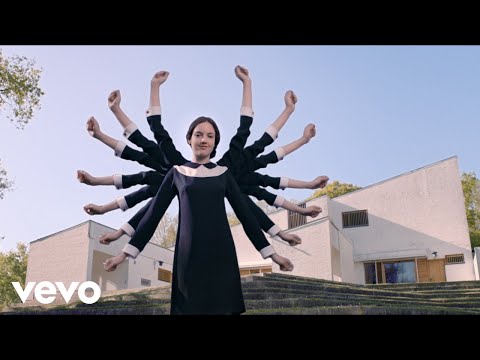
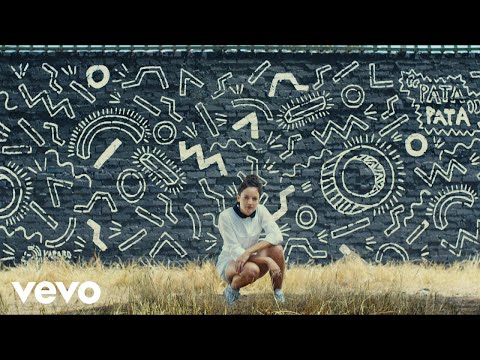
The music video, directed by Greg & Lio, was shot across Johannesburg, at places such as Miriam Makeba Street, Ponte Tower and Orlando Power Station. Jain turns knobs on a sound desk and the city’s streets and towers rise and fall with the music. It opens on the last frame of her previous video, Come, and it was nominated for Best Music Video at the 2018 Grammy Awards.
Artistic Context
Jain, born in Toulouse and raised in Dubai, the Republic of Congo and Abu Dhabi, credits her years in Congo for her taste for danceable melodies; she learned drums in Pau, Arabic percussion in the Middle East and music programming in Pointe-Noire. Yodelice (Maxim Nucci) discovered her demos and produced her debut album Zanaka, released on 6 November 2015, which included “Makeba” and the earlier hit “Come”. She wrote the song herself.
Impact and Reception
“Makeba” reached number seven in France and has had a remarkably long life: it introduces Amazon Prime Video’s Premier League and Ligue 1 coverage, has been used in ads for Levi’s and Marshalls, and in 2023, eight years after release, it went viral on TikTok and topped a Billboard dance chart. Its success has also kept Miriam Makeba’s name in front of a generation that might not have heard her otherwise.