Review
Genre and Mood
AWOLNATION’s Sail is an alternative anthem that refuses to behave like one. It is usually described as electronic and alternative rock with an industrial-tinged electropop edge, but instead of racing it crawls, slow and heavy, letting dread build until it bursts. The result is intense and haunting, and ultimately cathartic: a track that sounds like someone finally admitting what they have been holding in.
Song Summary
Sail is about self-destruction and self-knowledge, the singer blaming his own restlessness and wanting to drift away from it. The arrangement is stark: a deep, throbbing synth bass, a stomping beat, sparse electronic textures and Aaron Bruno’s voice moving from a strained murmur to a full-throated scream. Bruno has said a producer friend heard the song and told him everything was great but he needed a chorus; the one-word hook that answers that advice is what makes it unforgettable, and it hits harder because everything around it is so restrained.
Musical Breakdown
The song is built on contrast between near-silence and eruption, repeated until it becomes ritual.
Intro
A low, distorted synth bass and a slow, clattering beat open the track, sounding like machinery grinding into motion.
Verse 1
Bruno half-sings, half-confesses the opening lines, his voice close and tense, as if he is trying to stay calm.
Chorus
The title word explodes into a wail over the heavy pulse, the moment of release the song has been holding back.
Bridge
The arrangement pulls back to a quieter passage built around the piano, a brief, uneasy calm that sets up the final surge.
Climax
The chorus returns with everything pushed to the edge, the scream rawer and the bass louder, before the track starts to collapse in on itself.
Outro
The noise thins out to a few dying textures, leaving a strange, exhausted quiet.
Concepts in Focus
The sound that defines Sail is its bass, and it does not come from a bass guitar. Bruno made it on a Studio Electronics ATC-1 Tone Chameleon, a rackmount analog synthesizer designed to recreate classic instruments such as the Minimoog. That choice gives a rock song the weight and grain of vintage synth music: listen to how the low end growls rather than plucks.
The hook is a single word. Bruno was told the song needed a chorus and struggled to write a conventional one; instead the title, howled and stretched, does the job. A short hook works best when it is surrounded by space, and the slow, restrained verses provide exactly that.
Sail is also a case study in the music video as something fans can make. Years before the official video arrived in 2014, the YouTuber Nanalew uploaded an unofficial one in October 2011 that passed 400 million views and has always been more popular than the band’s own. A viral wingsuit-flying video by the athlete Jeb Corliss used the song too, and these uploads carried it far beyond radio.
Artistic Context
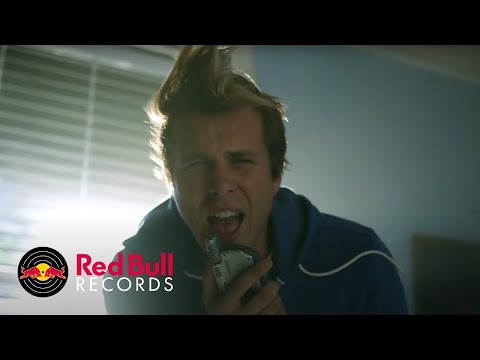
AWOLNATION is the project of Los Angeles songwriter Aaron Bruno, who wrote and produced Sail in Venice, Los Angeles, with Kenny Carkeet as engineer. It was released as a single on Red Bull Records in November 2010, appeared first on the EP Back from Earth and then on the debut album Megalithic Symphony in March 2011. The official video, released in 2014, follows Bruno as he runs into a house and is hunted by a beam of light that finally pulls him into the sky.
Impact and Reception
Sail became one of the great sleeper hits. It debuted at number 89 on the Billboard Hot 100 in September 2011, dropped out, and re-entered after television and advertising use, including a History Channel trailer for Vikings, finally peaking at number 17 two years after its debut. It spent 79 weeks on the chart, peaked at number five on Billboard’s Alternative chart, reached number 17 in the UK in 2014 and was certified diamond in the US in 2021. Turn it up, wait for that first howl and feel the room shift.