Review
Genre and Mood
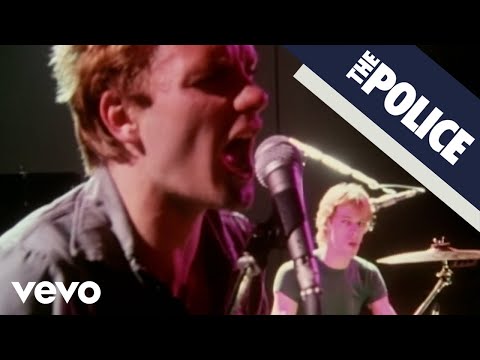
The Police’s Roxanne combines rock and reggae influences into a sound that stood out when it was released in 1978. The mood is intense and emotional, driven by Sting’s high, urgent vocal and the band’s spare, tight playing. The fusion of a cool, spacious rhythm with a desperate plea gives the track its signature tension.
Song Summary
“Roxanne” is sung by a man who has fallen in love with a woman working as a prostitute and begs her to leave that life. Sting wrote it after seeing the street workers near the band’s run-down hotel in Paris, where the Police were staying in October 1977 to play the Nashville Club; the name came from Cyrano de Bergerac, whose old poster hung in the hotel foyer. Its distinctive rhythm guitar and reggae off-beat set it apart from the punk scene the band came out of.
Musical Breakdown
Intro: The Iconic Opening
The song opens with an atonal piano chord and a burst of laughter, an accident preserved on tape: during recording Sting sat down on a piano keyboard in the studio. Then the band falls in.
Verse 1: The Plea
Sting’s voice, pleading and resolute, tells the story. Andy Summers’ guitar plays short chords on the off-beat while Sting’s bass and Stewart Copeland’s drums leave space around them, a laid-back yet tense groove.
Chorus: A Cry of Love
In the chorus Sting sings the name “Roxanne” again and again with rising intensity, backed by the band’s voices. The chorus is simple and powerful, which is why it is instantly memorable.
Bridge: Building Tension
The arrangement tightens and Sting’s voice becomes more urgent, matching the growing desperation of a man trying to convince someone to change her life.
Outro: The Unresolved Ending
The repetition of the name leaves a sense of lingering frustration and unresolved love, the plea still unanswered as the song ends.
Concepts in Focus
The verses are built on the reggae off-beat: instead of strumming on the beat as rock guitarists usually do, Summers places clipped chords in the gaps between the beats. Sting has said he conceived the song as a bossa nova and credits Copeland with suggesting the rhythm that made it work, and Summers remembered Copeland telling Sting where to place the bass notes. Listen to how much space the three players leave; the tension comes from what is not played.
Roxanne is also one of rock’s most adaptable songs for the cover version. George Michael recorded it on Songs from the Last Century in 1999, Juliet Simms took it into the Billboard Hot 100 from The Voice in 2012, and for Baz Luhrmann’s 2001 film Moulin Rouge! it was fused with Mariano Mores’s “Tanguera” into “El Tango de Roxanne”, sung by Jacek Koman, Ewan McGregor, Nicole Kidman and José Feliciano.
A different kind of borrowing is the interpolation. In 2022 Swedish House Mafia and Sting released “Redlight”, which re-sings parts of Roxanne inside a new house track rather than covering the whole song. Earlier, Puff Daddy’s 1997 remix “Roxanne ’97” with Pras sampled UTFO’s “Roxanne, Roxanne”, a song from another tradition that shares the name.
Lyrical Themes
The lyric of “Roxanne” explores:
- love for someone whose life the narrator cannot accept;
- the wish to rescue someone from a dangerous life;
- the desperation of a plea that may not be heard.
Cultural Impact
Recorded at Surrey Sound Studios, “Roxanne” was released as a single on 14 April 1978, the band’s first on A&M Records, ahead of their debut album Outlandos d’Amour in November. Sting called it a throwaway, and the band were embarrassed by how slow and melodic it was next to their punk material, but Miles Copeland, Stewart’s brother, loved it, became their manager and won them the A&M deal. The single did not chart at first; after it reached number 32 in the US in April 1979, its UK re-release that month peaked at number 12.
Legacy
Rolling Stone ranked “Roxanne” number 388 in its 500 Greatest Songs of All Time, it is one of the Rock and Roll Hall of Fame’s 500 Songs that Shaped Rock and Roll, and in 2008 it entered the Grammy Hall of Fame. The Police opened their 2007 Grammy Awards performance, which launched their reunion tour, with it. More than four decades on, it remains the band’s signature tune.