Review
Genre and Mood
The Horrorist delivers an intense experience with One Night In New York City, a track that turns the intensity of urban nightlife into something menacing. It combines a driving techno beat with a cold, menacing mood, and its voice tells a story instead of singing one.
Song Summary
“One Night In New York City” is, in Wikipedia’s words, a downbeat track about a young, naive suburban girl’s experiences over one night in New York City. Oliver Chesler, who records as The Horrorist, narrates it in a cold, spoken voice over aggressive beats, and the contrast between the flat delivery and the dark story is what makes it so unsettling. The city in the title is both a promise and a threat.
Musical Breakdown
Intro: Urban Pulse
The song opens with a pulsating machine beat, immediately establishing urgency. The rhythm is the city before the story begins.
Verse 1: Dark Vocals
Chesler’s spoken voice enters, introducing the girl and her night. The delivery is level and detached, a narrator who reports rather than reacts.
Chorus: Anthemic Energy
The title, the name of the city, anchors the track. On a dance floor it works as an anthem; in the story it sounds like a warning.
Bridge: Sonic Interlude
Midway through, the track gives the beat room on its own, a stretch of pure techno between parts of the story.
Climax: Full-Throttle Intensity
As the story darkens, the beat drives harder while the voice stays calm, the gap between them at its widest.
Outro: Fading Echoes
The track winds down after the story’s end, leaving the listener with the city and its noise.
Concepts in Focus
The vocal is spoken word: told, not sung. A spoken narrative over a club beat makes the listener follow the words as a story, and Chesler’s flat delivery adds a chill that melody would soften. The critic Simon Reynolds once called him his favourite contemporary American singer-songwriter, a striking description for someone who barely sings.
The track’s history is a lesson in the remix. It first appeared in 1996 on an EP on Chesler’s own Things To Come Records; a 1997 twelve-inch added remixes by Orlando Voorn and others, and later versions by Chris Liebing, Ricardo Villalobos and Pascal FEOS carried it into German techno. In the first week of January 2001 it reached number 1 on the German dance chart, five years after its first release, and Pete Tong reviewed it in Mixmag that May.
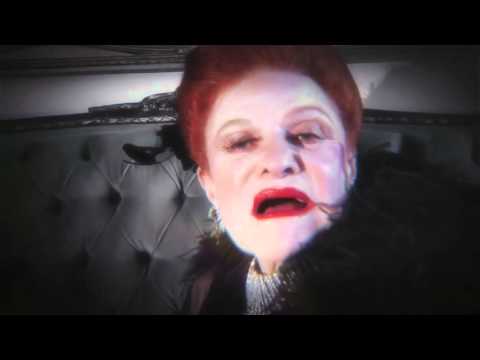
The music video, directed by Nils Tim and produced by Oktonet for Warner Music, was shot at The Limelight in New York with live footage from the U60311 club in Frankfurt. It was rotated on MTV and Viva in Germany and the Netherlands, while New Zealand’s Broadcasting Standards Authority banned it from TVNZ as unsuitable for free-to-air television. Compare the cooler, more ironic spoken voice of Miss Kittin – Frank Sinatra.
Artistic Context
Oliver Chesler was born in New York City in 1970 and owns the label Things To Come Records. His music spans hardcore techno, gabber, EBM, industrial techno, electropunk and new wave, and he has also recorded under aliases such as DJ Cybersnuff and Narcanosis. As a teenager he appeared as a contest winner in D. A. Pennebaker’s Depeche Mode documentary 101. One Night in NYC became one of four singles from his 2001 album Manic Panic, whose 2004 reissue topped the Deutsche Alternative Chart.
Cultural Impact
“One Night In New York City” moved from a small New York label to the top of the German dance chart and onto music television, and it has stayed in DJ sets and on techno compilations since; the recording linked here also appeared on the 2003 compilation Schranz Fusion. Find the track, play it loud and listen to the voice as much as the beat.