Review

Genre and Mood
Klangkarussell’s “We Want Your Soul” is an electronic anthem that combines long, progressive house rhythms with a pointed commentary on consumer culture. The track’s driving beat and sampled, spoken vocal lines create a hypnotic atmosphere, making it both a dance-floor record and a social critique.
Song Summary
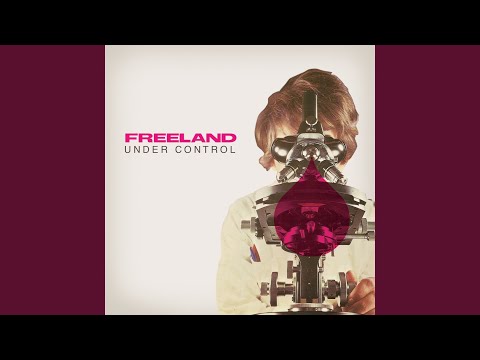
“We Want Your Soul” began as Adam Freeland’s 2003 single, a breakbeat track he described as being about the destructive side of consumer culture. It was the first track for which he wrote the lyrics; the verses are spoken by a speech synthesizer, and it samples the comedian Bill Hicks. Klangkarussell’s version is a remix: they keep Freeland’s voices and message and rebuild the music as slow-burning house, stretched on the album to more than eight minutes.

Musical Breakdown
Intro: Hooking the Listener
The track opens with a minimal beat that gradually introduces layers of electronic texture. The title phrase arrives early and works as an immediate hook, preparing the listener for both the rhythm and the message.
Build-up: Rising Energy
As the beat intensifies, more rhythmic and synthesizer elements are added, building momentum. The spoken lines repeat, creating a mantra-like effect that mirrors the repetition of advertising.
Main Section: The Groove and Message Unite
The core of the track revolves around a pulsating bass, played on electric bass by Felix Howard according to the credits, and synthesizers that drive the song forward while the machine voice delivers its critique of consumerism.
Bridge: Dynamic Shift
Midway through, the energy pulls back slightly, giving way to a more subdued section where the vocals become clearer, before the beat returns for the final push.
Climax: Explosive Energy
As the track nears its peak, the elements come together at full strength, a moment of dance-floor energy that keeps the song’s subversive undertone.
Outro: Echoing the Message
The track winds down with the repetition of the title phrase, the persistent voice outlasting the beat.
Concepts in Focus
This is a remix that changes genre. Freeland’s original is breakbeat, built on broken, punchy drums and released on his label Marine Parade; Klangkarussell turned it into the long, four-on-the-floor house of their album Netzwerk. They posted it on SoundCloud in 2011, the year the duo formed, and it was released officially in 2014 with Freeland credited as featured artist and additional producer.
The words come through sampling twice over. Freeland’s original samples Bill Hicks, the American comedian whose routines attacked advertising and marketing, and Klangkarussell’s remix samples Freeland’s track in turn, so Hicks’s anger is now two records deep.
The verses are spoken word delivered by a speech synthesizer rather than a singer. A flat, synthetic voice reciting what sounds like a sales pitch makes the critique colder and funnier at once: the message about manipulation comes from a machine.
Artistic Context
Klangkarussell are Tobias Rieser and Adrian Held, a duo formed in Salzburg, Austria, in 2011 and best known for “Sonnentanz”, their 2012 debut single and biggest hit. Their debut album Netzwerk, released on 28 July 2014 by Vertigo, Capitol and Universal, reached number 5 in Austria, 8 in Germany and 2 in Switzerland, and includes this remix. Adam Freeland is a British DJ and producer associated with the breakbeat scene; his original “We Want Your Soul”, written and produced with Damian Taylor, reached number 35 in the UK in 2003.
Impact and Reception
Freeland has said he turned down a request from the US retailer Target to license the song for an advertising campaign, which is the most direct proof that he meant its message. Klangkarussell’s version carried that message into a different scene, the melodic house of the 2010s, where it sits beside the duo’s warmer, sung tracks such as Moments. Its lasting appeal is the tension between a groove that wants your body and a voice that warns you about who else wants your soul.