Review

“Hania Rani - Full Performance (Live on KEXP)” is a 36-minute session recorded on 9 July 2022 and published by the Seattle radio station KEXP that October. In four pieces, 24.03, Ghosts, Komeda Part 3 and Buka, the Polish composer moves between piano and synthesizers, building quiet music that grows by patience rather than volume.
The session is a good introduction to how Hania Rani works live: pieces develop slowly from small, repeated ideas, and the electronic sounds extend the piano rather than replacing it.
Genre and Mood
Hania Rani’s KEXP session sits between ambient, neoclassical and minimal music. It is serene and elegant, but not static: the pieces build tension slowly and release it gently, and her work also draws on jazz and the pulse of house music.
Minimalism, a cornerstone of Hania’s style, emphasizes space and repetition, allowing each note to breathe. The pieces in this session are built from a few ideas developed patiently rather than from contrasting sections.
About the Artist
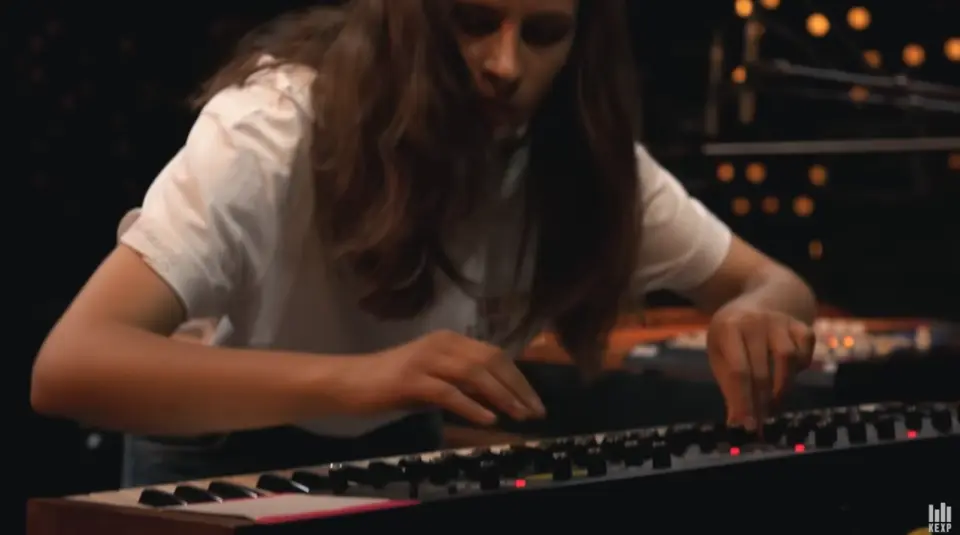
Hania Rani, born Hanna Raniszewska in Gdańsk in 1990, is a Polish composer, pianist and vocalist. She studied in Gdańsk, at the Chopin University of Music in Warsaw and at the Hanns Eisler School of Music in Berlin, and plays piano, synthesizer and sings. Her albums on Gondwana Records include Esja (2019), Home (2020), Ghosts (2023) and Nostalgia (2024), and she has recorded with the cellist Dobrawa Czocher.
Her standing has grown fast since this session: she received Poland’s Paszport Polityki in 2023, has won several Fryderyk awards, and won the European Film Award for Best Composer in 2026 for her score to Sentimental Value.
Song Summary
The set has four pieces. “24.03” opens it; she later released a live studio recording of it as the first track of Nostalgia. “Ghosts” shares its name with the album she released in October 2023, more than a year after this session. “Komeda Part 3” carries the name of the Polish jazz composer Krzysztof Komeda, and a piece called “Komeda” also appears on Nostalgia. “Buka” closes the set and comes from her 2020 album Home.
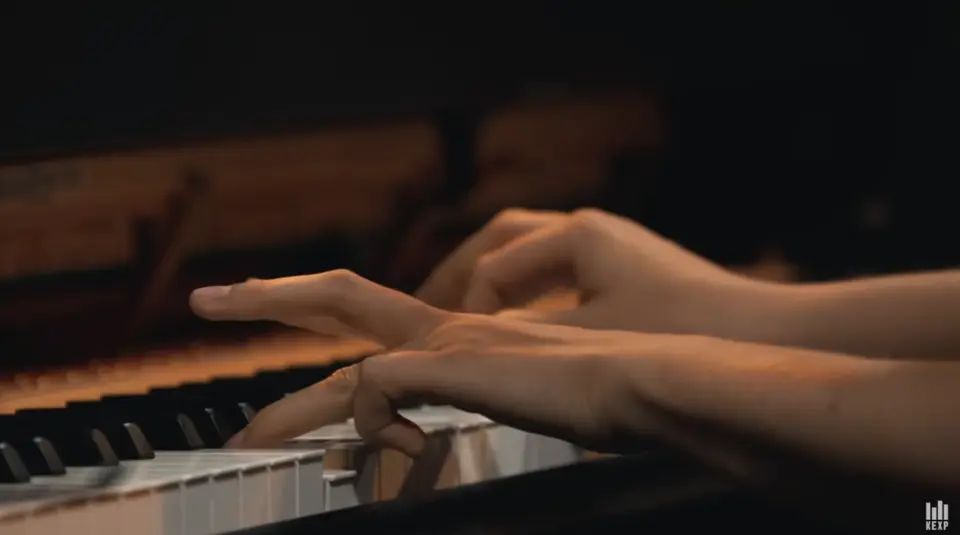
Across the set she moves between acoustic piano and synthesizers, and the electronic layers widen the sound into something cinematic without losing the intimacy of one player at a keyboard.
Highlights from the Comments
Hania Rani’s KEXP session has captivated audiences around the world, as seen in the heartfelt comments left by listeners on YouTube:
“I saw her in Toronto, the day before this performance. It was INSANE. Best concert ever. It took place in an adjacent building owned by a local church. Poor ventilation. Ticket was only $20. She received several standing ovations. She was amazing.”
— @boshkodjordjevich7424
“A fabulous fusion of rhythmic loops, which include elements of jazz, neoclassic to trance elements. Poland should be very proud of you.”
— @MichaelFuchs-y1k
“I guess right now she is becoming the biggest Polish name in music since Komeda. It’s great she didn’t lock herself in the world of classical music but instead was bold enough to go beyond, into the unknown.”
— @wolf79wolf79
“There is a kind of magnetism in Hania’s music, even if you have something to do, you don’t want to move, you just want to stay here, earphones on, enjoying the magic.”
— @superdrac
Sound Breakdown
Intro: A Gentle Invitation
The session begins with “24.03”, setting a calm tone and introducing the language of the whole set: short figures repeated and slowly varied.
Midsection: Emotional Crescendos
“Ghosts” and “Komeda Part 3” form the centre of the set. Here the pieces grow in density as piano and synthesizer layers accumulate, and the Komeda title nods to Polish jazz history.
Climax: A Cinematic Arc
The fullest moments of the session come when the accumulated layers peak, an expansive sound made by one musician and her instruments in a small room.
Outro: A Return to Stillness
“Buka”, from Home, closes the session, returning to her earlier material and to a quieter register.
Concepts in Focus
This is a live recording, and it is worth noticing how much that matters to Hania Rani. Two of these pieces, 24.03 and Komeda, later appeared on Nostalgia as live recordings from Studio 1 in Warsaw rather than as studio constructions. For music built on slow development, a single unbroken performance keeps the tension that editing can flatten. KEXP’s format, a fixed camera crew, a short interview and a handful of songs, makes the same point visually; compare the very different energy of Sleaford Mods – Tweet Tweet Tweet in the same kind of session.
The synthesizer is her second instrument. Wikipedia lists it alongside piano and voice, and in this set it supplies sustained tones and pulses that the piano cannot hold. Watch how the electronic layers enter under the piano rather than on top of it: they make one player sound like an ensemble.
Overall Vibe
Hania Rani’s KEXP session is a lesson in patience. Its serene, elegant and introspective qualities come from restraint: four pieces, few ideas each, and the confidence to let them unfold.
Conclusion
In her KEXP session, Hania Rani shows the music she was developing in 2022, before Ghosts and Nostalgia brought it to wider audiences. Watch it from the beginning, and then listen to the album versions of 24.03 and Buka to hear how the same pieces live on record.
If you haven’t yet experienced this performance, take the time to watch it whole. It is 36 minutes of one musician thinking aloud at the keyboard.