Review
Northern Lite’s remix of “Time Has Changed” by Codec & Flexor comes from the song’s 2004 remix EP, where it sits beside the original and a remix by Zombie Nation. The remix keeps the song’s central idea, a cool voice stating that time has changed, and rebuilds the music around it in the style of the Erfurt band.
The track pairs a melancholy refrain with a forward-moving club pulse. That tension between looking back and moving on is in the song itself; the remix decides how much of each to let through.
Genre and Mood
“Time Has Changed” belongs to the German electro and electroclash of the early 2000s, where minimal techno met synth-pop and new wave vocals. Northern Lite’s remix leans toward their own electronic pop, so the melancholy of the original meets something warmer and more melodic. The result is introspective and danceable at once.
About the Artists
Codec & Flexor are the German duo of Sven Zalac (Codec) and Matthias Freund (Flexor), who had played together in the indie band Atomic Comic in the early 1990s. They signed to Forte Records in 2001, and “Time Has Changed” first appeared in 2002 on Eldar, a split 12-inch shared with Kompakt co-founder Michael Mayer. It became their best-known song, was added to the American edition of their debut album Tubed on Emperor Norton in 2003, and led to this remix EP.
Northern Lite were founded in Erfurt in 1997 by Andreas Kubat and Sebastian Bohn. Their music joins techno and electropop with rock guitars, critics have called it neo pop, and they founded the label 1st Decade Records in 2000. They won the Dance Music Award for best indie/electronic artist in 2005, a year after this remix.
Song Summary
The remix is built on contrast. Codec & Flexor’s original is cold and mechanical, a tight machine groove with a detached vocal; Northern Lite keep that voice and its title phrase and surround it with their own synthesizer parts. The light and dark in the track come from that meeting of two German electronic acts with different temperaments.
Sound Breakdown
Intro: A Melancholic Prelude
The remix opens with beat and atmosphere before the song arrives. Compare it with the original’s stark drum-machine opening: the frame is the remixer’s, not the songwriters’.
First Drop: Melodic Euphoria
When the full groove and the vocal come in, the remix shows its hand. The bass anchors the track and the synthesizers carry more melody than in the original, a lift rather than a hit.
Midsection: Introspective Groove
The middle of the track gives room to the remixers’ own layers. It is where Northern Lite’s melodic electronic style is easiest to hear against the song’s minimal roots.
Final Drop: Cathartic Energy
The last section brings the full arrangement back with the refrain. At six minutes, the remix is a little shorter than the original on the same record and moves to its close more directly.
Concepts in Focus
This is a remix in the classic club sense: a different producer takes the parts of a finished record, keeps what identifies the song, here the vocal and its title phrase, and rebuilds the rest. The remix EP makes the comparison easy, because it puts Codec & Flexor’s original, Zombie Nation’s version and Northern Lite’s version on one record. Listen to Codec & Flexor – Time Has Changed (Original) first and then to this one.
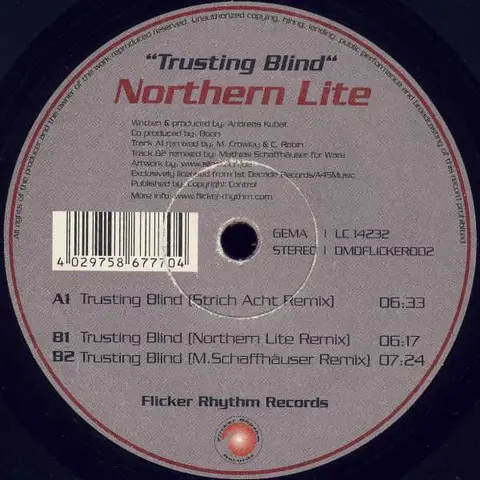
The difference between the versions lives mostly in the synthesizer. Codec & Flexor use cold, pulsing, analogue-style sounds; Northern Lite’s music, as heard in Northern Lite – Trusting Blind, joins electronic textures with pop melody. The same words feel different depending on whether the synthesizers around them sound like machines or like a band.
Overall Vibe
Northern Lite’s remix of “Time Has Changed” is a lesson in reinterpretation. It keeps the original’s melancholy and adds a warmer, more melodic setting, and it shows how two German electronic acts of the same years could hear one song differently.
Conclusion
The remix is worth hearing next to the original rather than instead of it. Together they show what a remixer can change, and what has to stay for a song to remain itself.