Review

Genre and Mood
Blankets takes The Hanging Tree, the folk song from The Hunger Games, and reimagines it as electronic music, a cover that keeps the haunting core and adds a dancefloor pulse. The mood is haunting, hypnotic and defiant: the eerie refrain of the original, now pushed forward by a beat.
Song Summary
The lyrics come from Suzanne Collins’ novel Mockingjay (2010), a riddling murder ballad about a meeting at a hanging tree at midnight; in the 2014 film Jennifer Lawrence sings it a cappella and the rebels turn it into an anthem. The melody was written by Jeremiah Fraites and Wesley Schultz of the Lumineers, whom the director Francis Lawrence asked for something that could be hummed by one person or sung by a thousand. Blankets’ version understands that the melody is what made the original so powerful, simple, repetitive and unsettling, and builds electronic production around it that turns its slow menace into momentum. It sits somewhere between a cover and a remix, honouring the song’s chill while making it move.
Musical Breakdown
The track follows the familiar arc of the song but trades the orchestral crescendo for an electronic build and release.
Intro
The cover opens quietly, with the haunting melody presented over sparse, atmospheric sounds, keeping the song’s folk eeriness intact.
Verse 1
The female vocal carries the strange, riddling verses, close and intimate, while a programmed pulse begins to stir underneath.
Build-up
Synths and percussion rise around the voice, the tension climbing as the refrain repeats.
Chorus
The beat takes over and the melody becomes a hook, the defiance of the original translated into a driving electronic groove.
Outro
The production recedes, returning the song to something close to its bare, unsettling beginning.
Concepts in Focus
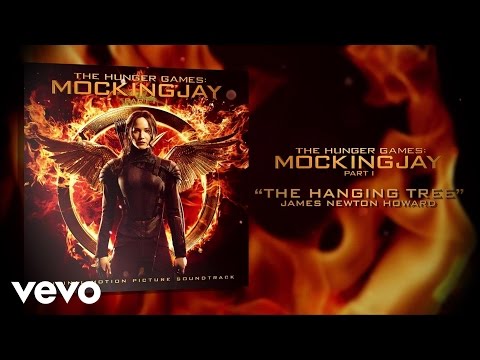
A cover version has to decide what is sacred. Blankets keep the words and the melody exactly and change everything around them: the a cappella voice and orchestral swell of the film become a pulse and synthesizers. Listen to it right after James Newton Howard, Jennifer Lawrence – The Hanging Tree and notice how little the tune itself needs to change for the song to feel like it belongs to a different place.
That is possible because the melody is a hook by design. Schultz was told not to make it complicated, and in the film version it moves within a single octave in a few repeated phrases. Hooks that simple survive almost any arrangement, which is why the song produced a club remix by Michael Gazzo within a week of its release as a single, and a wave of covers after it.
The Hanging Tree is also a case of a soundtrack song escaping its film. Written for a scene in The Hunger Games: Mockingjay – Part 1, it reached number 12 on the Billboard Hot 100 and topped charts in Germany and Austria. A European dance-pop cover a few months later is part of that afterlife: the song had become popular music in its own right, no longer only a piece of the film.
Artistic Context
Blankets is a French act, and The Hanging Tree, released on 2 March 2015 and distributed by Universal’s Mercury Records in France, was presented as its first single. The official video was directed by Léo Schrepel for Baghera Films. It arrived in the wave of covers that followed the success of the version by James Newton Howard and Jennifer Lawrence. A single of remixes by Mozambo, Cherokee and Karlk followed in April 2015.
Impact and Reception
The original’s success opened the door for dozens of reinterpretations, and Blankets’ version stood out by moving the song decisively into electronic territory rather than simply re-singing it; in the summer of 2015 it appeared on French radio compilations from Fun Radio and Radio FG. It belongs on this playground next to the original so you can hear how far a single melody can travel, from a riverbank in a dystopian film to the dancefloor. Listen to both and compare how each one builds its tension.