Review
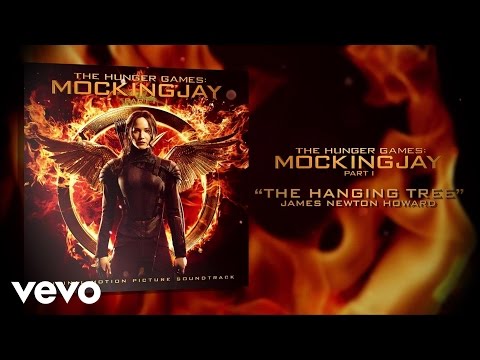
Genre and Mood
James Newton Howard and Jennifer Lawrence turned The Hanging Tree from a scene in a film into a hit, a folk ballad that grows into a soundtrack anthem. The mood is haunting, melancholic and quietly defiant, an eerie old-time song that becomes a call to arms.
Song Summary
The lyrics come from Suzanne Collins’ 2010 novel Mockingjay, a dark, riddling murder ballad about a meeting at a hanging tree at midnight. In The Hunger Games: Mockingjay, Part 1, Katniss Everdeen sings it by a river, and the film then turns it into a rebel hymn sung by crowds marching on a dam. The recording follows that arc: it starts with Lawrence’s bare, unpolished voice and grows into a swell of voices, strings and pounding drums. That rawness is the point; she sounds like a person, not a star.
Musical Breakdown
The track is a slow crescendo, moving from a lone voice to a massed, cinematic climax across three and a half minutes.
Intro
Lawrence sings alone, unaccompanied and close to the microphone, her voice plain and a little rough, setting the song’s chill immediately.
Verse 1
The first verses keep the intimacy of a lullaby, the melody simple and repetitive, the words strange and unsettling.
Build-up
Other voices begin to join her, and low strings and percussion enter underneath, turning a private song into a shared one.
Climax
James Newton Howard’s orchestration surges: martial drums and swelling strings carry the refrain, transforming a whispered folk tune into a defiant anthem.
Outro
The music pulls back and the song ends close to where it began, the unsettling melody hanging in the silence.
Concepts in Focus
The Hanging Tree is a soundtrack song in the fullest sense: it exists to do a job inside a story. In the film it shows how a song can travel, from one person by a river to a crowd of rebels, and the record keeps that function. It also shows how a soundtrack can escape its film: the single topped the charts in Austria, Germany and Hungary, places where many listeners met it as a song before they saw the scene.
The arrangement is one long build-up. It starts from nothing, a single unaccompanied voice, and adds layers until the orchestra and drums take over. Unlike a dance track’s build-up there is no drop and no return to quiet in the middle; the tension rises once, the way a crowd grows. Compare how the James Newton Howard, Jennifer Lawrence – The Hanging Tree (Rebel Remix) turns the same voice into a club record.
Artistic Context
James Newton Howard scored the Hunger Games films and produced the song for Mockingjay, Part 1. Collins’ lyrics were set to music by Jeremiah Fraites and Wesley Schultz of the Lumineers, and the orchestral recording was conducted by Pete Anthony. Lawrence was anxious about singing in front of others and cried during filming; she had suggested that Lorde sing it while she lip-synced, but the director, Francis Lawrence, refused. The song first appeared on the film’s score album in November 2014 and was released by Republic Records as a single on 9 December 2014, with a remix by Michael Gazzo following a week later.
Impact and Reception
The song debuted and peaked at number 12 on the Billboard Hot 100, reached number 1 in Austria, Germany and Hungary and the top 20 in the UK, and was certified double platinum in the US and platinum in Germany and Canada. Critics mostly praised Lawrence’s vocal and the song’s effect as a murder ballad, some comparing it to Billie Holiday’s “Strange Fruit”. It inspired countless covers and remixes. It is here because it shows how a simple, haunting melody can outgrow its film. Listen as it builds and feel the room change.


