Review

Genre and Mood
Aloe Blacc’s I Need A Dollar is soul that reached the public by an R&B route, a record so close to its 1970s models that, as Complex noted in 2010, listeners often took it for an old soul side. Complex also called it gritty and haunting: a plea for help sung with warmth rather than self-pity.
Song Summary
The song is a request from a man who has lost his job and spent his last pay: the chorus asks whoever is listening to share a dollar. Blacc told Complex that he heard it as a kind of spiritual, shaped by field recordings of Southern chain gangs that a housemate had given him. The music came later, from a jam with the Brooklyn production team Truth & Soul, with drums, keys, bass and guitar in the room and urgent pianos around his voice.
Musical Breakdown
No source we found walks through the track bar by bar, so this keeps to what reviewers and Blacc described.
Intro
SoulCulture wrote that viewers of How to Make It in America would know the opening bars at once: striking piano keys, the backdrop for what follows.
Verse 1
The verses carry what the same review called painful tales of the everyday struggle. Blacc told Complex the whiskey and wine verse came to him early, though it ended up buried inside the finished song.
Chorus
The chorus is the part he wrote first, in 2005, in Los Angeles traffic, and recorded as a memo on his phone.
Outro
The song closes with horns, which Blacc told Complex he found too predictable.
Concepts in Focus
A hook does not have to be clever. This one is a plain sentence anyone could say; AllGigs’ reviewer found it catchy as hell, with a great groove.
The chord progression has an unusual history. Blacc had the melody and most of the words; at Soul Fire Studios in Williamsburg in February 2009, Truth & Soul started jamming, and the chords they found fitted the song already in his head. The melody of a 2007 version, sung with friends over stomping and clapping, survived intact, he said.
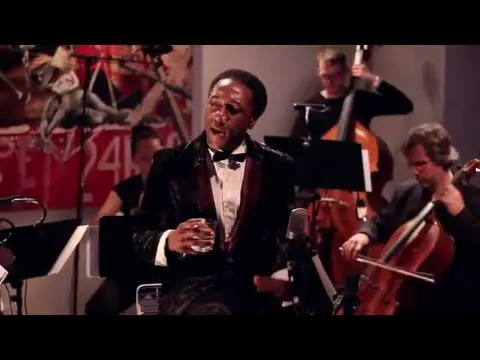
The single had two music videos: a 2010 split-screen film shot in New York, Blacc singing in an apartment while a man walks the streets, and a 2011 one directed by Derek Pike that follows him down a Nevada highway to a Las Vegas slot machine. For the same song on stage, see Aloe Blacc – I Need a Dollar (Live).
Artistic Context
The song opens Good Things, Blacc’s second album, released by Stones Throw in September 2010 and produced by Truth & Soul, Leon Michels and Jeff Silverman. It came out first as a single on 16 March 2010. Complex reports that the label had found an earlier Los Angeles session too commercial, which sent Blacc to New York.
Impact and Reception
HBO’s music supervisors chose it from about twenty Stones Throw songs after the show’s first theme was dropped. It reached number one in Flanders and number two in the UK and Ireland, went platinum in the UK, and became a favourite for hip-hop freestyles. Play it, and listen for the piano before the plea.