Review

Genre and Mood
Marbert Rocel’s Like Abby Said is electronic music from a Leipzig trio that German Wikipedia files under electro-pop, on an album Juno Daily filed under broken beat and nu jazz. Its mood is the one the band claims for all its music: playful on the surface and bittersweet underneath, “music in major with chords in minor”, in their words, which their label calls exhilarating but always with a stroke of bittersweet pain.
Song Summary
Like Abby Said is the eleventh of thirteen tracks on Catch A Bird, the band’s second album, and runs four minutes and forty-six seconds. Its title is spelled two ways: Bandcamp and MusicBrainz list it as Like Abbey Said, the streaming services as Like Abby Said. The credits describe a small band: Antje Seifarth sings, Alexander Binder plays bass, Philipp Milner synthesizer and Panthera Krause saxophone, while Marcel Aue programs. Aue and Krause composed it, Seifarth and Krause wrote the words, and the band produced it.
Musical Breakdown
No review describes Like Abby Said on its own, so this breakdown stays with what its credits and the album’s descriptions say.
Main Section
Listen for the meeting of the played and the programmed. Juno heard Catch A Bird as a soulful kind of techno in which guitar and clarinet count as much as synthesizer keys. Here the credits name bass, synthesizer and saxophone over Aue’s programming, and Seifarth’s voice on top.
Outro
How the track ends is not described in any source. Notice whether it closes like a song, on the voice, or lets the groove run out on its own.
Concepts in Focus
The band’s own formula is a lesson in the minor key. A melody can sound bright while the chords under it are minor, and the result is the bittersweet colour their label describes: cheerful on top, sad underneath.
The beats come from a machine. The band’s biography says that Malik and Panthera, after a joke about training dogs to imitate bass drums, focused on MPC and computer instead; the MPC is a sampler that works as a drum machine, and Marcel Aue is credited as programmer here.
The credits also show mixing as its own craft: Aue mixed the track together with Ilja Gabler, and Ralf Christian Meyer mastered it. Even a band that produces itself hands the final balance to more than one pair of ears.
Artistic Context
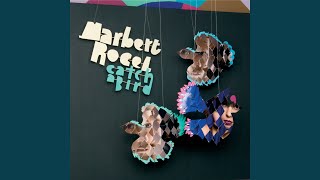
Marbert Rocel formed in Erfurt in 2004 and are based in Leipzig: the producers Marcel Aue (Malik) and Robert Krause (Panthera Krause) with the singer Antje Seifarth (Spunk). After Speed Emotions on Compost Records in 2007, Catch A Bird followed in autumn 2009 under the catalogue number CPT 338. Marbert Rocel – Hush Now comes straight after this track on the album.
Impact and Reception
Juno called Catch A Bird lively and unpredictable and singled out Ba Ba Bounce and Clappeople rather than this song. Compost Records put it on YouTube in 2017, eight years after release. It is here as a deep cut no critic singled out, which leaves the first verdict to you. Put it on and listen for the minor chords under the major tune.