Review

Genre and Mood
Marbert Rocel’s Trenchcoat is electronic music from a band German Wikipedia files under electro-pop and that describes itself as listening to rap, loving jazz and liking best to dance to house. The mood is bittersweet and playful, in the band’s own terms: music in major with chords in minor, which its label calls exhilarating, but always with a stroke of bittersweet pain.
Song Summary
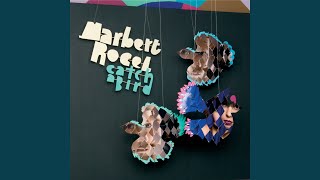
Trenchcoat is the tenth of thirteen tracks on Catch A Bird, the trio’s second album, and runs four minutes and two seconds. Its credits are short. Marcel Aue and Panthera Krause composed it, Aue programmed it, Krause plays saxophone, and the band produced it; Aue and Ilja Gabler mixed it and Ralf Christian Meyer mastered it. Unlike the album’s My Bed, the credits name no singer and no lyricist, and no source says more about it than that.
Musical Breakdown
No review describes Trenchcoat on its own, so this breakdown stays with its credits and with what the band and its label say about the album.
Main Section
Listen for the saxophone against the programming. The band’s biography, written as a playful fable, says Malik and Panthera gave up on dogs imitating bass drums and Fender Rhodes and focused on MPC and computer instead, and its recipe for Catch A Bird lists keys, purring basslines, transformer drums and brass angled by three degrees east. Which of these Trenchcoat uses, beyond the credited saxophone, is for your ears to decide.
Outro
How the track ends is not described in any source. At four minutes, notice whether it closes like a song or fades out like a groove.
Concepts in Focus
The credits are a lesson in mixing. After the parts are programmed and played, someone sets their levels, places them left and right, shapes their tone and decides what sits in front; then mastering prepares the finished mix for release. Here the programmer is also one of the two mixing engineers, so the person who built the parts also decided how they meet.
The band’s line about major and minor points to the minor key. A melody can sound bright while the chords under it are minor, and the result is the bittersweet colour their label describes. Compare Marbert Rocel – My Bed, five tracks earlier, where a voice carries the same idea.
Artistic Context
Marbert Rocel formed in Erfurt in 2004 and are based in Leipzig: the producers Marcel Aue (Malik) and Robert Krause (Panthera Krause) with the singer Antje Seifarth (Spunk). Their first album, Speed Emotions, came out on Compost Records in 2007; Catch A Bird followed in autumn 2009, with Bandcamp, YouTube and Compost each giving a different day. They have remixed Lana Del Rey, Marek Hemmann and Clueso, and in 2010 formed Karocel with Mathias Kaden and Michael Nagler.
Impact and Reception
No source singles out Trenchcoat, and none reports a chart place or a review of it. Compost uploaded it to YouTube in 2017, eight years after release, next to Marbert Rocel – Hush Now and the rest of the album. It is here as an album track that rewards close listening. Four minutes; listen for the saxophone.