Review
Genre and Mood
Marc Houle and Miss Kittin meet on Where is Kittin?, a club track between electro and techno. Its label described it as a “jagged hybrid”, which is where the edgy feeling named here comes from; hypnotic and dark are this page’s reading of a long, machine-built track drawn from industrial and new wave influences, not a critic’s words.
Song Summary
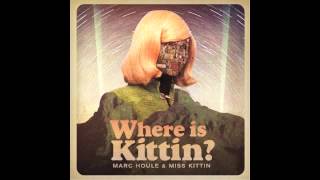
Where is Kittin? opens a six-track EP released by Items & Things on 24 May 2013, catalogue IT022. The label’s notes call the title track a jagged hybrid of Houle’s signature style and Kittin’s deadpan vocal talent, building on the “disco-not-disco”, industrial and new wave influences of Houle’s 2012 album Undercover. The original runs 5:57. Beside it the EP holds a second original, Black Star, remixes of the title track by Dubfire and by John Foxx & The Maths, and two digital-only versions by Kittin herself.
Musical Breakdown
The sources describe the track’s ingredients rather than its course, so this breakdown is short.
Main Section
Houle’s production carries the track and Kittin’s voice rides on it, the “deadpan” of the label’s description. The notes on the John Foxx & The Maths remix, which brings “the male vocal line” to the forefront, imply that the original also holds a second, male voice further back in the mix. No source says whose it is.
Outro
No source describes how the original ends. Listen for whether it closes on the voice or on the machines.
Concepts in Focus
A remix is a new version made by reworking a recording’s parts, and this EP shows three kinds. Dubfire, whom the label called the techno mastermind of SCI+TEC, made a nine-minute version that furthers the track’s main-room potential. John Foxx & The Maths, the electronic pioneer John Foxx with the modular-synth experimentalist Benge, turned it into what the label called a roaring techno and electro-pop live hybrid. And Kittin remixed her own collaboration: the Shecago Remix, stripped down and digital-only.
electroclash explains the voice. Kittin came up in the late 1990s with The Hacker, whose Miss Kittin – Frank Sinatra paired cold electro with a delivery that sounded bored on purpose. On Where is Kittin? the same detachment meets Houle’s techno fifteen years on.
Artistic Context
Marc Houle, born in Windsor, Ontario, in 1972, released his first record, Restore, on the label Minus in 2004 and moved to Berlin in 2008. Items & Things began in 2006 as a Minus sub-label; in 2011 Houle, Magda and Troy Pierce left Minus and took it independent. Miss Kittin, born Caroline Hervé in Grenoble in 1973, released her double album Calling From the Stars in April 2013, and the label presented this EP as its companion.
Impact and Reception
Wikipedia calls Where Is Kittin a well-received EP, but no review of the title track itself could be found, so what is said about it here rests on the label’s notes and an EVL Magazine announcement. Start with the original, then play the Shecago Remix to hear what Kittin keeps when she takes her own song apart.