Review
Genre and Mood
Gabriella Cilmi turns Cry Me A River (Live Version) into a soul song that sounds decades older than it is. It is a cover with a pop pedigree, but the delivery is pure soul: raw, bittersweet and full-throated, with the slightly ragged edges only a live take can give.
Song Summary
Justin Timberlake’s 2002 hit, written with Timbaland and Scott Storch for his debut album Justified, was a sleek kiss-off built from electric piano, beatbox, guitars, synthesizers and Gregorian-style chants. Cilmi strips all that away. Her version uses a small band, Tom Welham on guitar and Kali De Vaux on bass, both also singing, and lets her husky contralto carry the story of betrayal and cold satisfaction. Where the original sounds triumphant, this one sounds wounded, as if the singer is not quite sure she has won.
Musical Breakdown
The arrangement is kept loose and sparse, with the voice always in front.
Intro
A few soft chords from the band set a smoky, late-club atmosphere before the voice comes in almost immediately.
Verse 1
Cilmi sings the opening lines low and measured, holding back, the grain in her voice doing as much work as the words.
Chorus
The famous refrain opens up into a bigger, bluesier wail. Here you hear the old-school soul and blues she grew up on, and the hurt behind the bravado.
Bridge
The band thins out and her voice drops back, making the next swell feel even larger.
Climax
The last choruses are the most fiery, with runs and ad-libs that push the song from reproach to catharsis.
Outro
The band settles and she lets the final line hang, a quiet ending that feels more like a sigh than a slammed door.
Concepts in Focus
This is a cover version that keeps every word and changes the meaning. Timberlake’s original was widely heard as a song about his break-up with Britney Spears, sung by a man moving on. In the mouth of a teenage female singer with a voice built for blues, the same lines sound less like a victory lap and more like someone convincing herself. Listen with the original nearby and hear two completely different break-ups.
It is also a live recording, made by the production team Xenomania, who are credited with recording and mixing it, with a three-piece band playing together. The point of a live take is what it does not fix: a slightly ragged edge in the voice, the way the band breathes with the singer, the ad-libs in the last choruses that would be planned in a studio and are spontaneous here.
Artistic Context
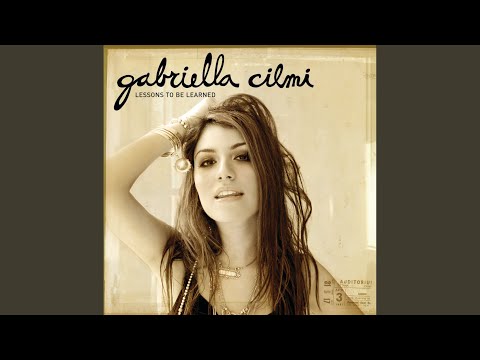
Gabriella Cilmi was born in 1991 in Dandenong, a suburb of Melbourne, and grew up on Nina Simone, Janis Joplin, Led Zeppelin and Suzi Quatro. Signed to Island Records UK after a Warner executive heard her sing “Jumpin’ Jack Flash” at a Melbourne street festival, she released her debut album Lessons To Be Learned in March 2008, at sixteen. This live Cry Me A River first appeared on the Australian CD single of “Don’t Wanna Go to Bed Now” on 21 July 2008, beside a live “Sweet About Me”, and was then added as a bonus track to digital editions of the album.
Impact and Reception
The same year Cilmi won six ARIA Music Awards, including Single of the Year and Best Female Artist. This B-side is a small window onto what made her stand out: a big, old-fashioned voice in a very young singer, able to change a song’s meaning without touching a word.


