Review
Genre and Mood
Patti Smith’s “Smells Like Teen Spirit” is a cover that moves a rock anthem into folk, a dark and reflective reading of a song that the world first heard as a roar.
Song Summary
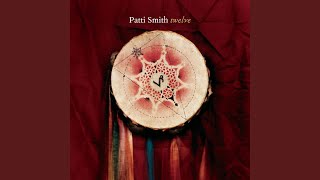
Nirvana’s original opened their 1991 album Nevermind and is often marked as the point when grunge entered the mainstream. Smith recorded it for Twelve, released by Columbia on 17 April 2007, an album of twelve covers. At six and a half minutes it is a long version: Open Culture describes a spare country arrangement of bass, acoustic guitar, violin and banjo, with no drums at all. The detail that makes it memorable comes near the end, when Smith leaves the lyric and adds poetry of her own.
Musical Breakdown
No source walks through the cover bar by bar, so the breakdown follows what the reviews and the album’s credits describe.
The Arrangement
The album’s credits name three banjo players on this track, John Cohen, Sam Shepard and Walker Shepard, with Peter Stampfel on fiddle and Duncan Webster on acoustic guitar. Treble hears banjo-flavoured strumming with the fiddle playing throughout: a string band, not a rock band.
The Verses and Choruses
Smith keeps Cobain’s words and melody, but Paste notes that she uses his text as a verbal springboard rather than a script, the only song on Twelve where she takes real liberties.
The Poem
Before the final chorus, Treble hears her poetic improvisations; Far Out calls it free-flowing poetry added to complement Cobain’s lyrics. Then the chorus returns.
Concepts in Focus
A cover version can keep a song’s words and melody and change everything else. Here the drums, the distorted guitars and the quiet-loud dynamics that made the original famous are gone; Treble loved that this version sounds nothing like the original. What remains is a lyric and a tune, and the question of whether the song still stands on them. Open Culture’s answer is that Cobain’s songwriting stands up to the test.
The closing poem works as spoken word, the tradition Smith came from: her first public poetry performance, in February 1971, had Lenny Kaye on electric guitar, and her first single, Hey Joe, added a spoken piece to a rock standard. In a cover, an added verse is the interpreter stepping out from behind the song to answer it. Compare how Ane Brun – Big In Japan keeps the original’s words and only changes the setting.
Artistic Context
Twelve was produced by Smith with her long-time band, Lenny Kaye, Jay Dee Daugherty and Tony Shanahan, and recorded at Electric Lady and Loho Studios in New York and Effigy Studios in Michigan. Smith had honoured Cobain before: her 1996 album Gone Again included “About a Boy”, a tribute to him. “When Nirvana came out, I was really excited,” she told Rolling Stone, and his death was “quite a blow to me.”
Impact and Reception
Twelve reached number 60 on the Billboard 200 and drew a Metacritic score of 65. Treble called this one of its most original covers, even better than the original. It shows how far a song can travel and still be itself: listen to Nirvana first, then to this.