Review

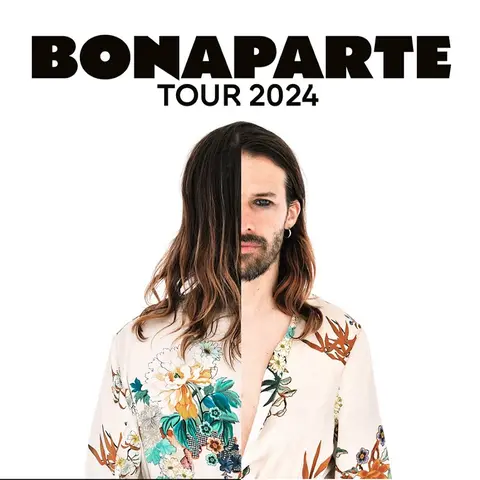
Bonaparte and Acid Pauli come together in “Not Today,” a track that combines Bonaparte’s theatrical, socially critical songwriting with Acid Pauli’s electronic production. It is one half of a two-track single, Good Morning / Not Today, released on 17 July 2020.
“Not Today” is a song of refusal. Its narrator lists what it has watched humans do, from electing villains to selling off native land, and when the listener finally asks to be saved, the answer is the title.
Genre and Mood
The track sits between electronic, pop and experimental music: a dance-ready pulse under a vocal that is closer to cabaret than to club diva. The mood is energetic and oddly uplifting for a lyric this bleak, because the refusal is delivered with a grin; underneath, the questions it asks are introspective ones.
About the Artists
Bonaparte is the project of Tobias Jundt, a Berlin-based Swiss songwriter and producer, active since 2006 and known, in Wikipedia’s words, for “socio-critical lyrics as well as its celebration of hedonism” and for expressive live shows that Der Tagesspiegel called “a trash circus unleashed”. Albums such as Too Much (2008), My Horse Likes You (2010) and Was Mir Passiert (2019) mix dance-punk, electronic rock and indie rock. Acid Pauli is Martin Gretschmann, long the electronics programmer of The Notwist and the man behind the project Console, whose piece Crabcraft became Heirloom on Björk’s Vespertine. He describes Acid Pauli as sitting “somewhere between ambient and techno”.
Song Summary
The song is built in a classic pop shape around an unconventional narrator. The verses are lists of accusations; a pre-chorus turns on the listener who now wants rescue and claims to be a believer; and the refrain answers with two words, repeated. The credits split the work evenly: Tobias Jundt and Martin Gretschmann are both credited as composers and lyricists, and the production is credited to Bonaparte and Acid Pauli.
Sound Breakdown
Intro: Energetic Pulse
“Not Today” opens with Acid Pauli’s electronic pulse, a groove that sets the tone before the voice enters.
First Verse: Captivating Vocals
Jundt delivers the first verse as a string of questions about who let the damage happen, half sung and half declaimed, confident and sardonic rather than mournful.
Chorus: An Anthem of Resilience
After the pre-chorus throws the plea for rescue back at the listener, the refrain lands: the title, repeated, with a shrugging “no, no”. It is a refusal sung like a party chant.
Bridge: A Moment of Reflection
A short third verse changes the angle: the narrator promises to stay on as a shadow in the listener’s conscience, watching, before the pre-chorus and refrain return.
Final Chorus: A Joyful Climax
The refrain is repeated several times at the end until the title is all that is left, the song’s argument reduced to its two words.
Concepts in Focus
Not Today is a clear example of verse-chorus form, with one extra step. The verses carry the story, a different set of grievances each time; the pre-chorus, the same each time, turns from story to confrontation; and the refrain delivers the verdict. Reading the lyric’s shape before listening makes the structure easy to follow, and shows how much of a pop song’s force comes from the order in which its sections arrive.
The refrain is also the song’s hook. A hook is the part a listener remembers, and here it is the shortest possible phrase, two words that are both catchy and the whole argument. Compare the deadpan, accusing vocal of Sleaford Mods – Tweet Tweet Tweet, where social criticism also comes over a spare beat with more sneer than melody.
Overall Vibe
“Not Today” is uplifting, introspective and energetic at once: a song you can dance to that keeps asking uncomfortable questions. The collaboration works because each side keeps its character, Bonaparte’s theatre and Acid Pauli’s electronics.
Conclusion
With “Not Today,” Bonaparte and Acid Pauli turn a plea for rescue on its head. The track’s theatrical vocal, electronic pulse and a refrain built from a single refusal make it a sharp, catchy piece of social commentary from the summer of 2020.
Lyrics
The lyric is written from the point of view of something that “gave you life” and has watched humanity misuse it: it recalls villains on the ballot, lifeboats on the rocks and a governor selling native land, threatens to become the “next wave pandemic”, and answers every late plea for salvation with the title. The full text is available on licensed lyric services and with the release on streaming platforms.