Review
Genre and Mood
Gorillaz and De La Soul meet on Feel Good Inc., where alternative rock, hip-hop and electronic production share one song. It is playful in its laugh and its cartoon, satirical in its target, and groovy from the first bar of bass: a hit that sounds like fun while it talks about being sold fun.
Song Summary
Damon Albarn wrote the song in 2003 on the way to the Coachella festival, after driving through a valley full of windmills that gave the chorus its image. It became the lead single of Demon Days, released on 9 May 2005 by Parlophone in the UK and Virgin in the US. Danger Mouse, who co-produced the album, suggested De La Soul for the rap; Trugoy (David Jolicoeur) wrote and performed the verse, and Maseo’s laugh became one of the song’s signatures.
Musical Breakdown
Intro
The track opens on a sample of A Fistful of Peanuts, the Spacemonkeyz dub of the earlier Gorillaz single Clint Eastwood.
Bass Line
Then the bass. Sean McCarthy of The Daily Vault wrote that the song starts off with a killer bass line.
Chorus
The chorus changes the colour: McCarthy heard something that could be a sixties protest anthem, and Drowned in Sound singled out Simon Tong’s Balearic house guitar on this track.
The Rap
Then, in McCarthy’s words, De La Soul comes in and crashes the party: Trugoy’s verse, and the laugh of his bandmate Maseo.
Concepts in Focus
A <a href=“https://korczis.github.io/sonic-playground/concept/featured-artist/” class=“concept-link font-medium text-primary-700 underline decoration-dotted underline-offset-4 hover:decoration-solid dark:text-primary-400” data-concept=“featured-artist” title=“A guest performer credited on another artist’s track, usually as “feat.”: a rapper’s verse, a singer’s hook or a second voice. Features bring together different styles and audiences and are central to hip-hop, R&B and dance music.“>featured artist is a guest credited on another artist’s track. De La Soul did more than add a verse: the laugh came from Maseo laughing at the music that day, and it was Trugoy’s idea to keep it in.
The bassline is the lowest melodic part, and here the song starts on it, before any word is sung. sampling links the song to the band’s past: its first seconds borrow a dub remix of their own Clint Eastwood.
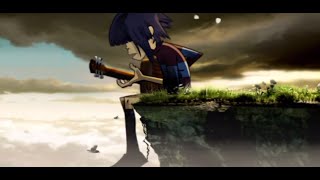
The music video, directed by Jamie Hewlett and Pete Candeland, puts 2-D in a tower full of dazed people while Noodle drifts past on a floating windmill island inspired by Miyazaki’s Castle in the Sky. Its themes are intellectual freedom and the media’s dumbing down of mass culture; De La Soul appear as giant figures on screens.
Artistic Context
Gorillaz are the virtual band Albarn created with the illustrator Hewlett, its music made with many real collaborators. The song was recorded with Danger Mouse at Kong Studios and 13 in Essex and London; the same sessions produced Gorillaz, Neneh Cherry – Kids With Guns. De La Soul’s own history with borrowing is long: in 1989 they sampled the Turtles’ You Showed Me without clearance and were sued.
Impact and Reception
Feel Good Inc. reached number two in the UK and 14 on the Billboard Hot 100, topped the US Modern Rock chart for eight weeks and won the 2006 Grammy for Best Pop Collaboration with Vocals; the video won two MTV awards. Its melody still travels, as filous, LissA – Feel Good Inc. shows. Turn it up and wait for the laugh.