Research // Research note 06 Technical
Method: building an evidence-gated artifact with Majordomus
Published 2026-09-14 · 4 min read
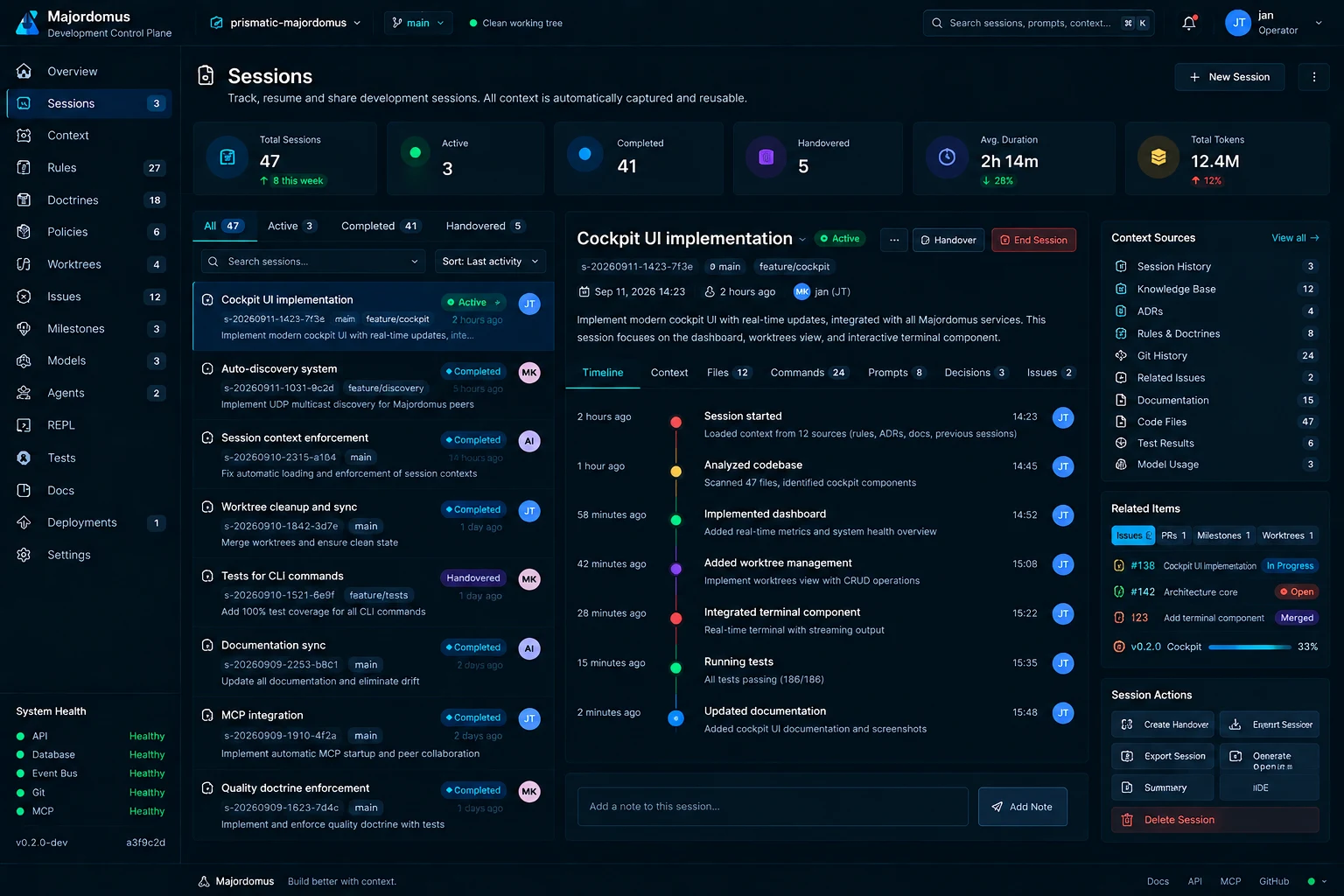
Concept screens · illustrative data
-
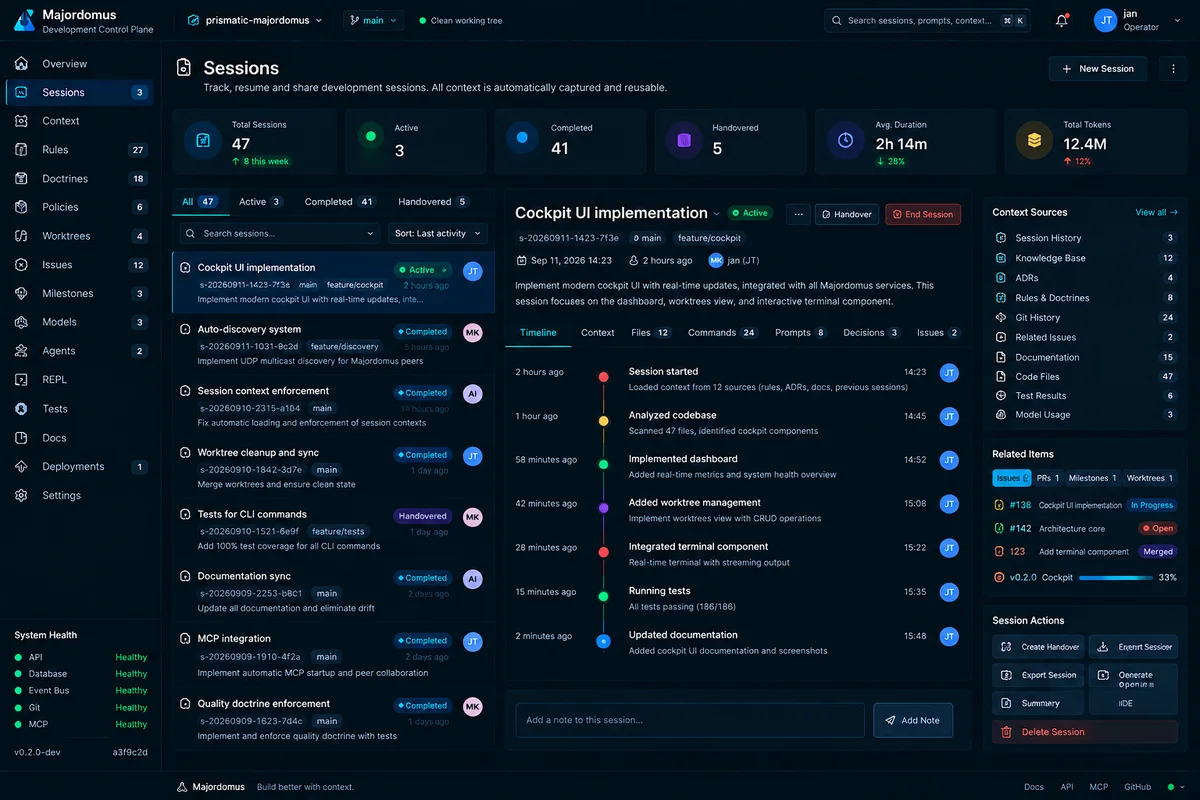
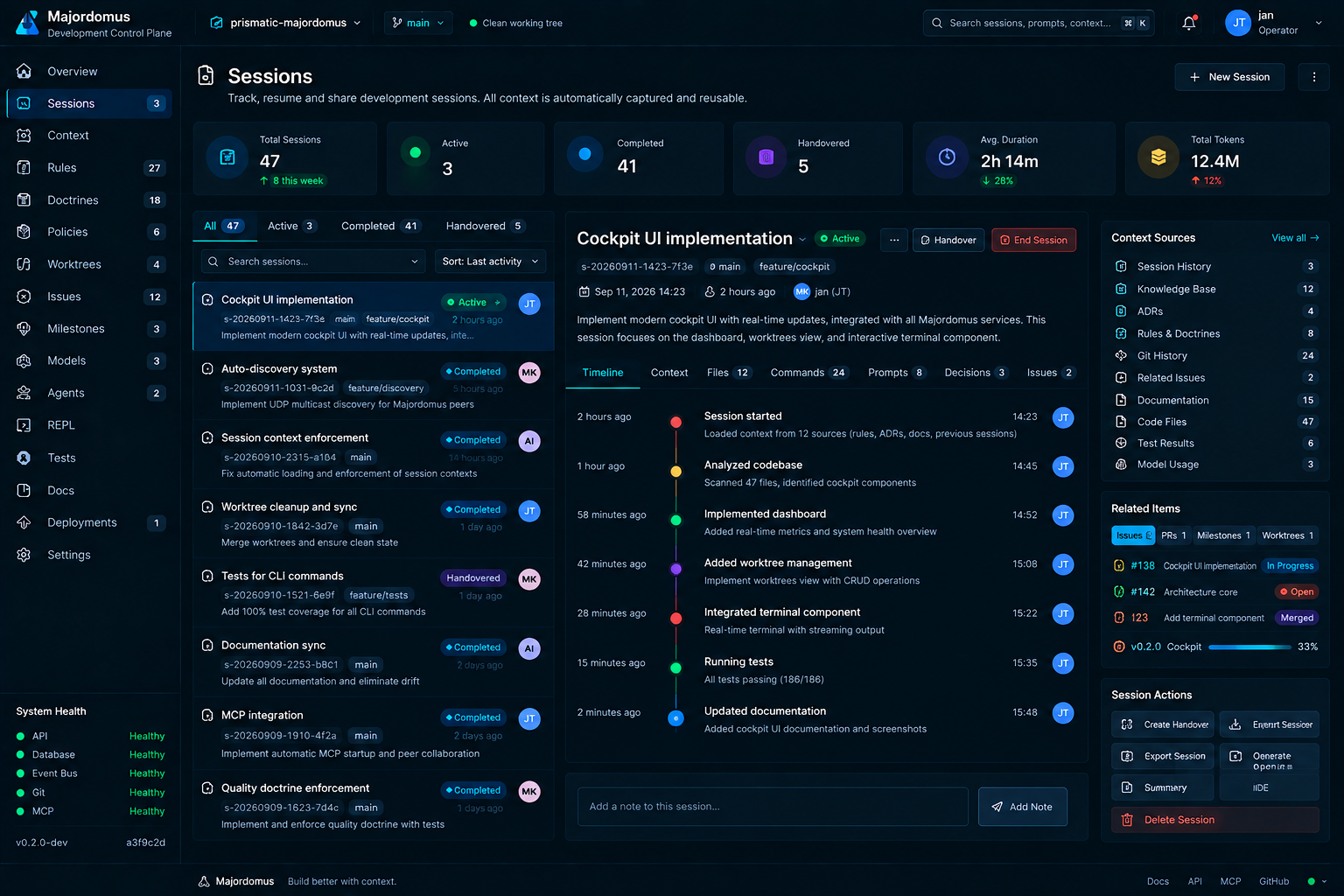
Sessions Each session keeps its timeline, context sources, decisions and handover.
-
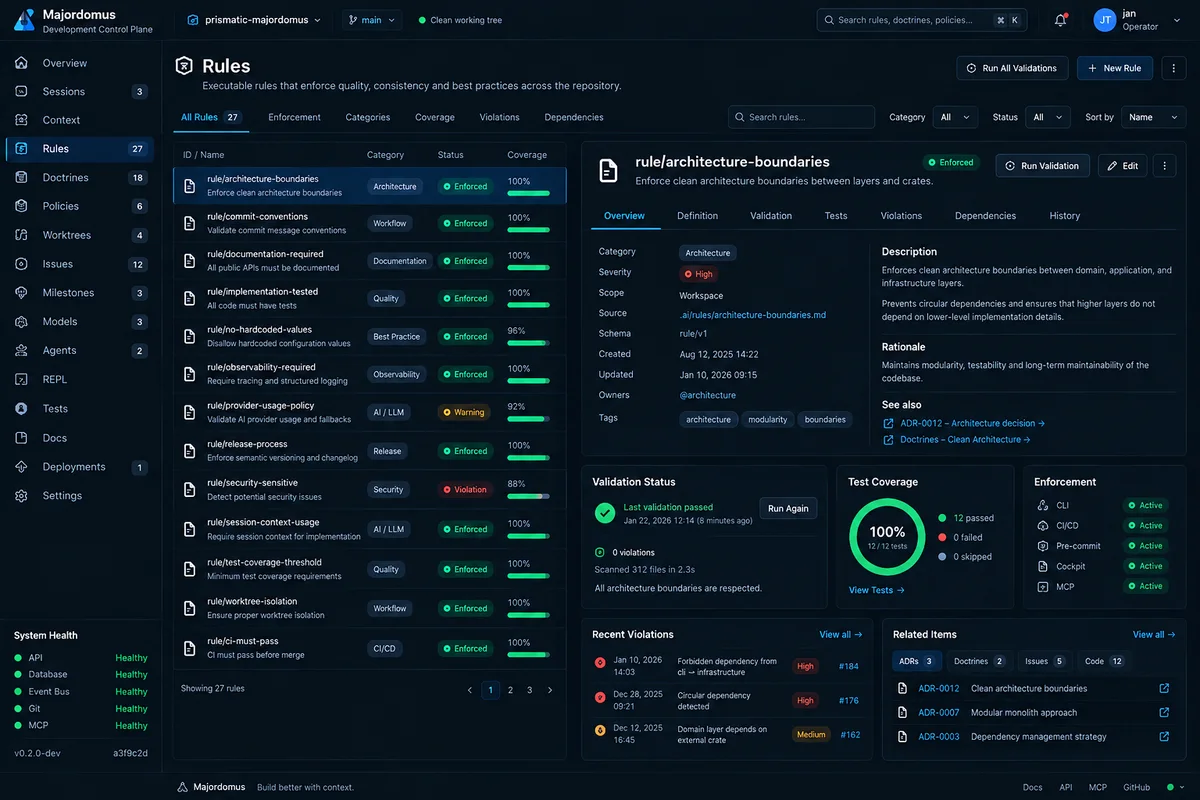
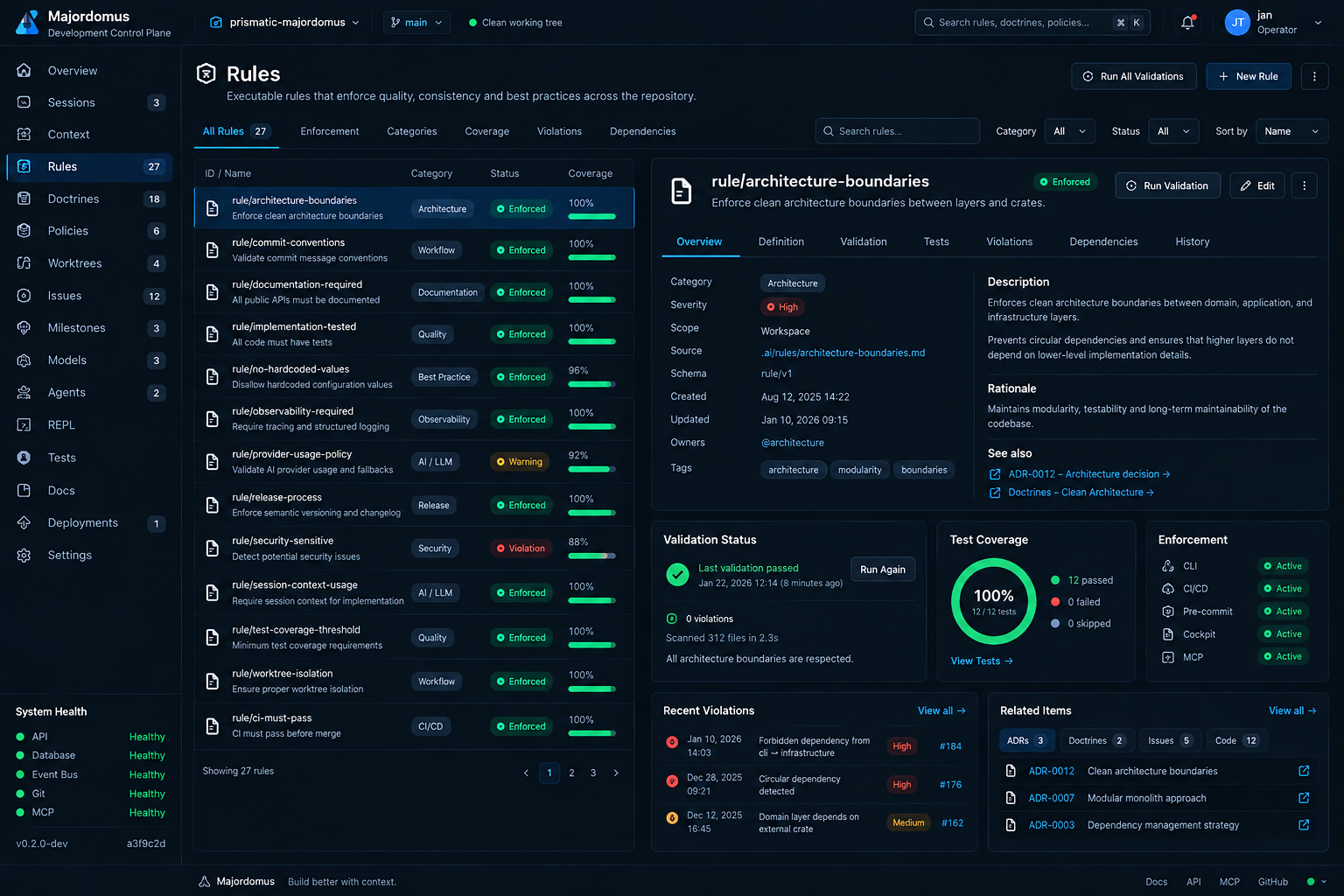
Rules Executable rules with their enforcement points: command line, CI, pre-commit hook.
-
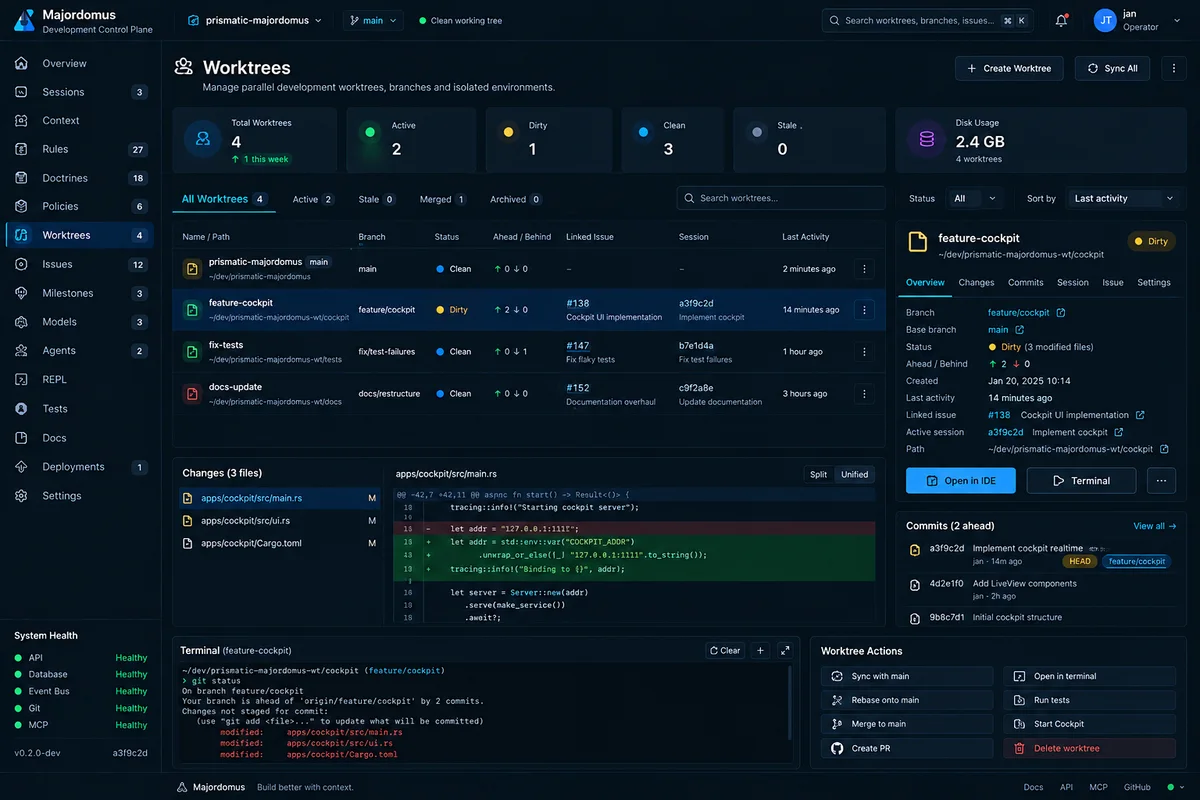
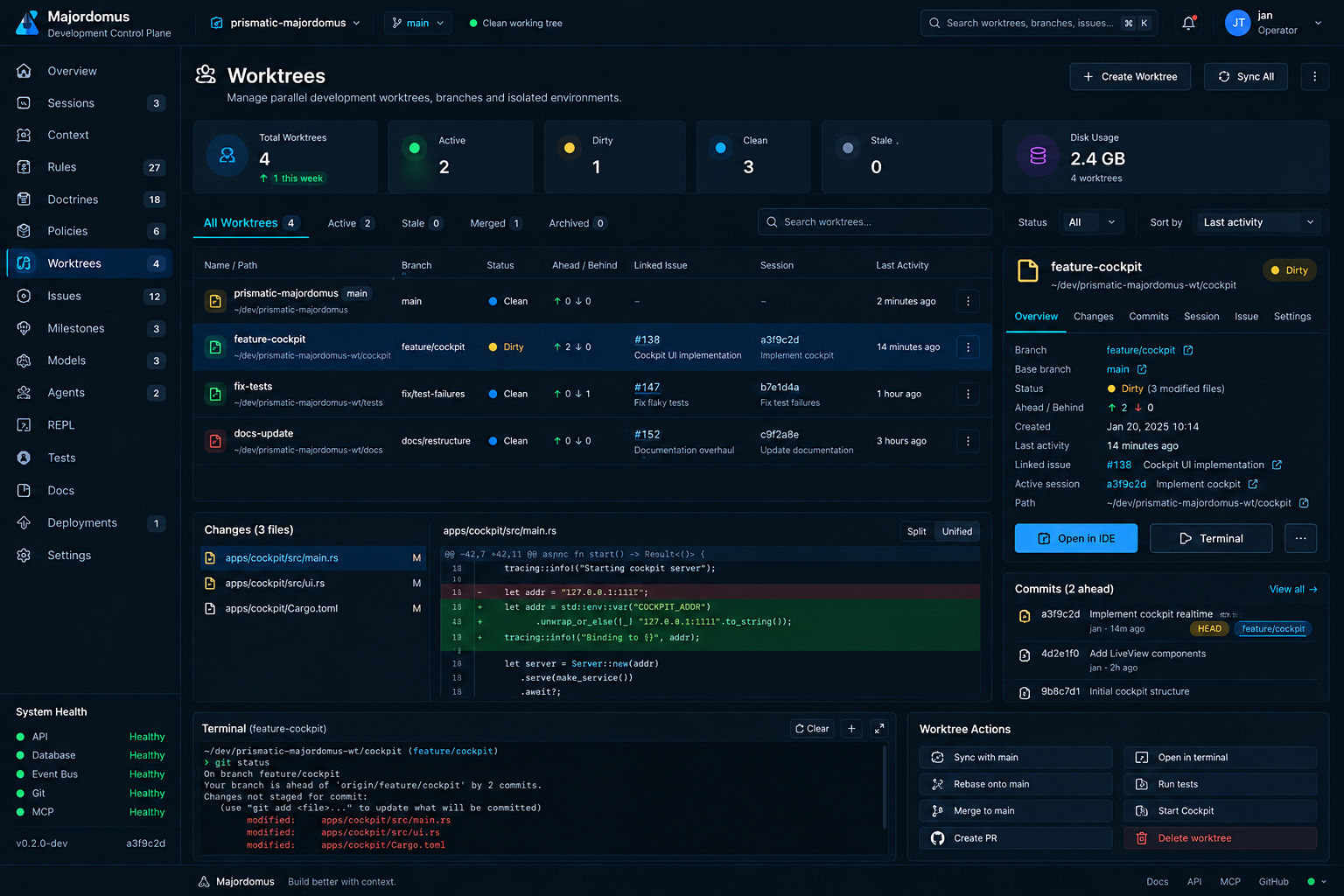
Worktrees Parallel branches in their own worktrees, each tied to an issue and a session.
-
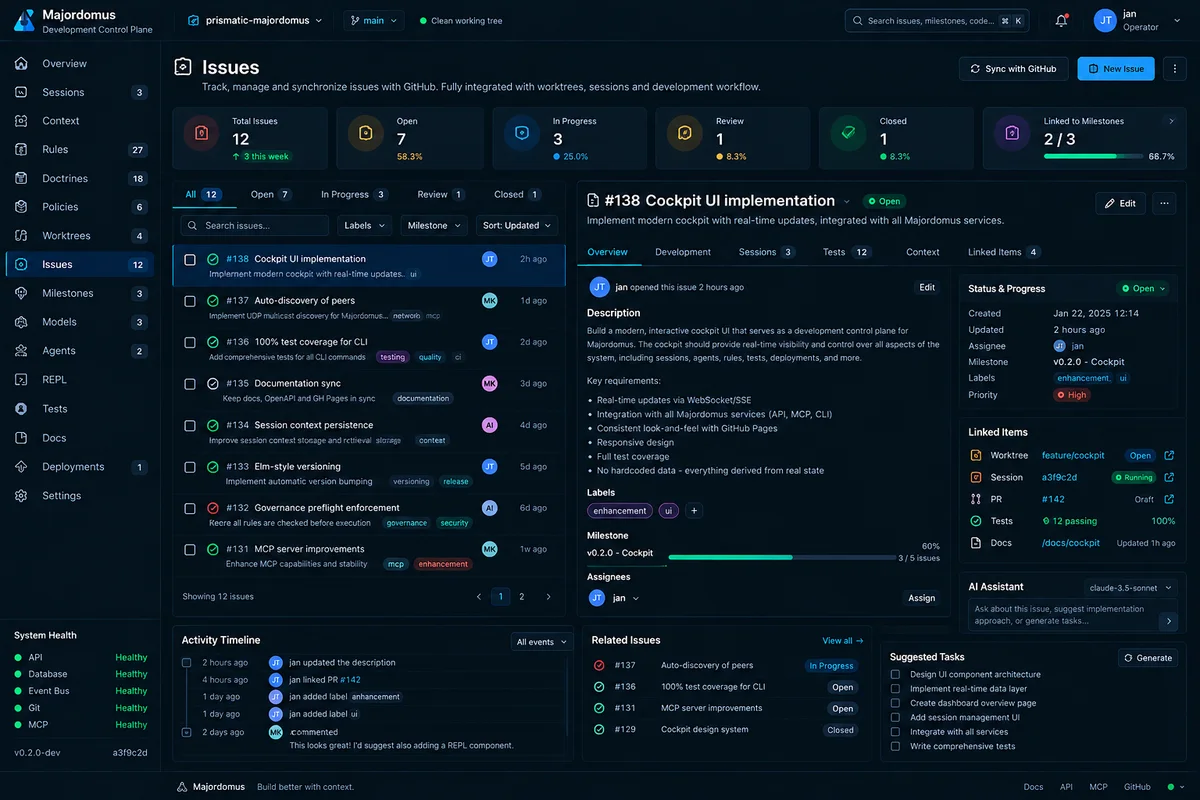
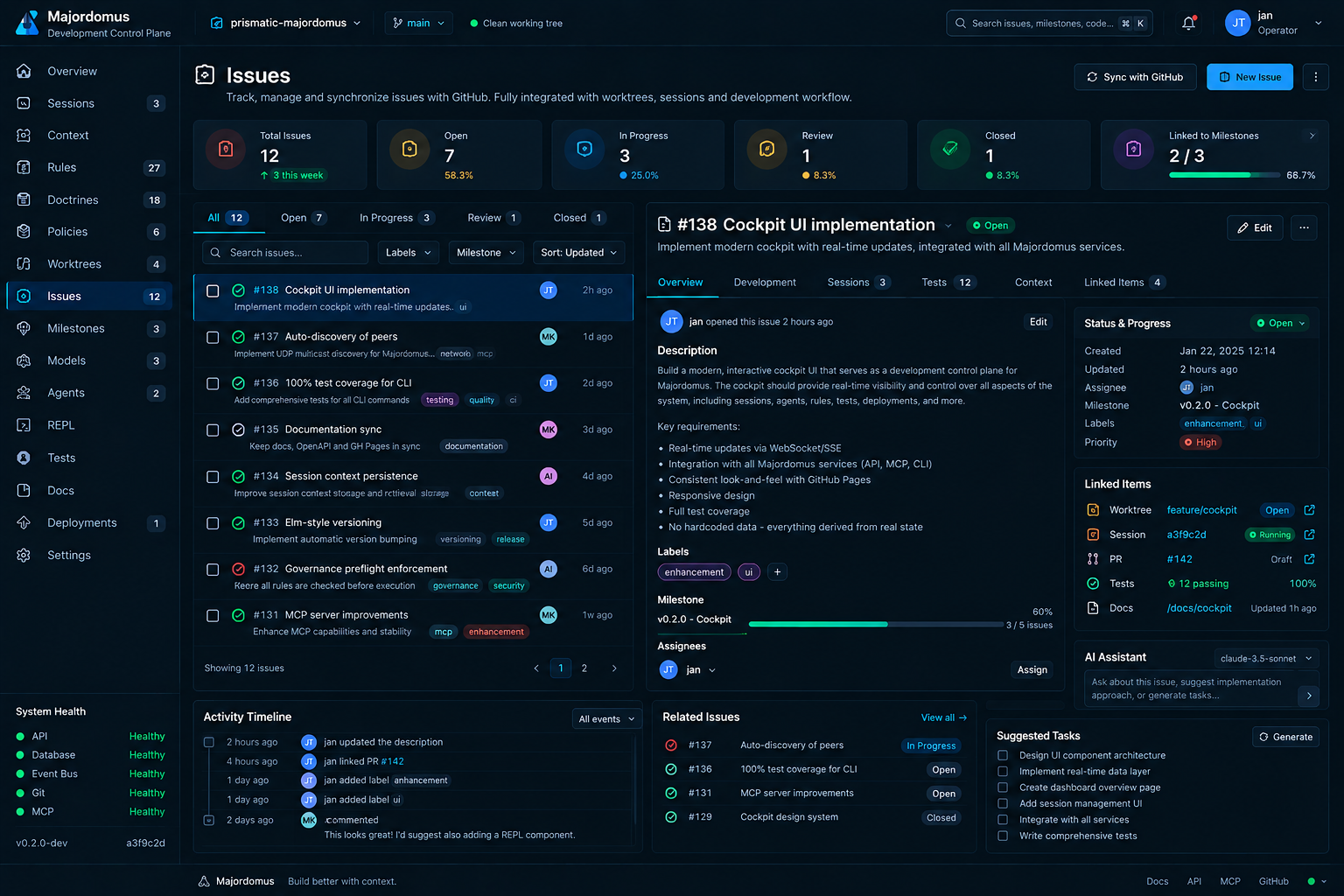
Issues An issue connected to the work that implements and verifies it.
-
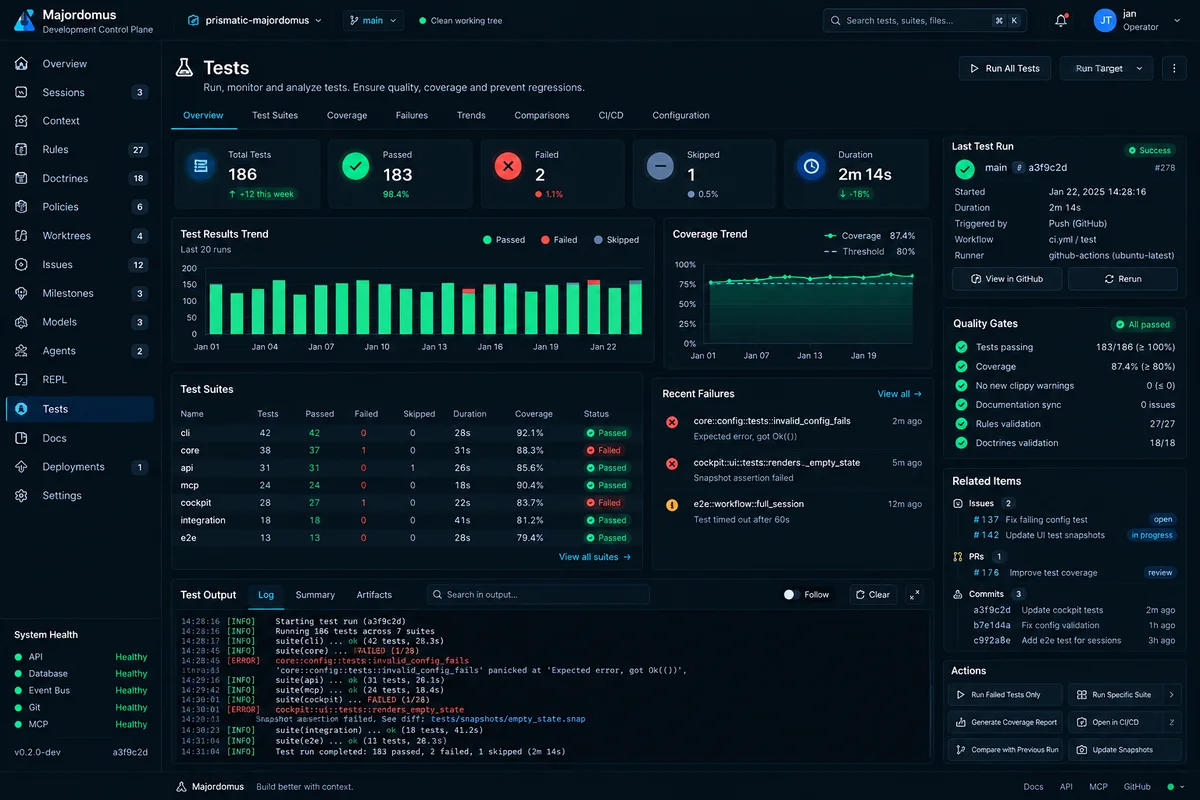
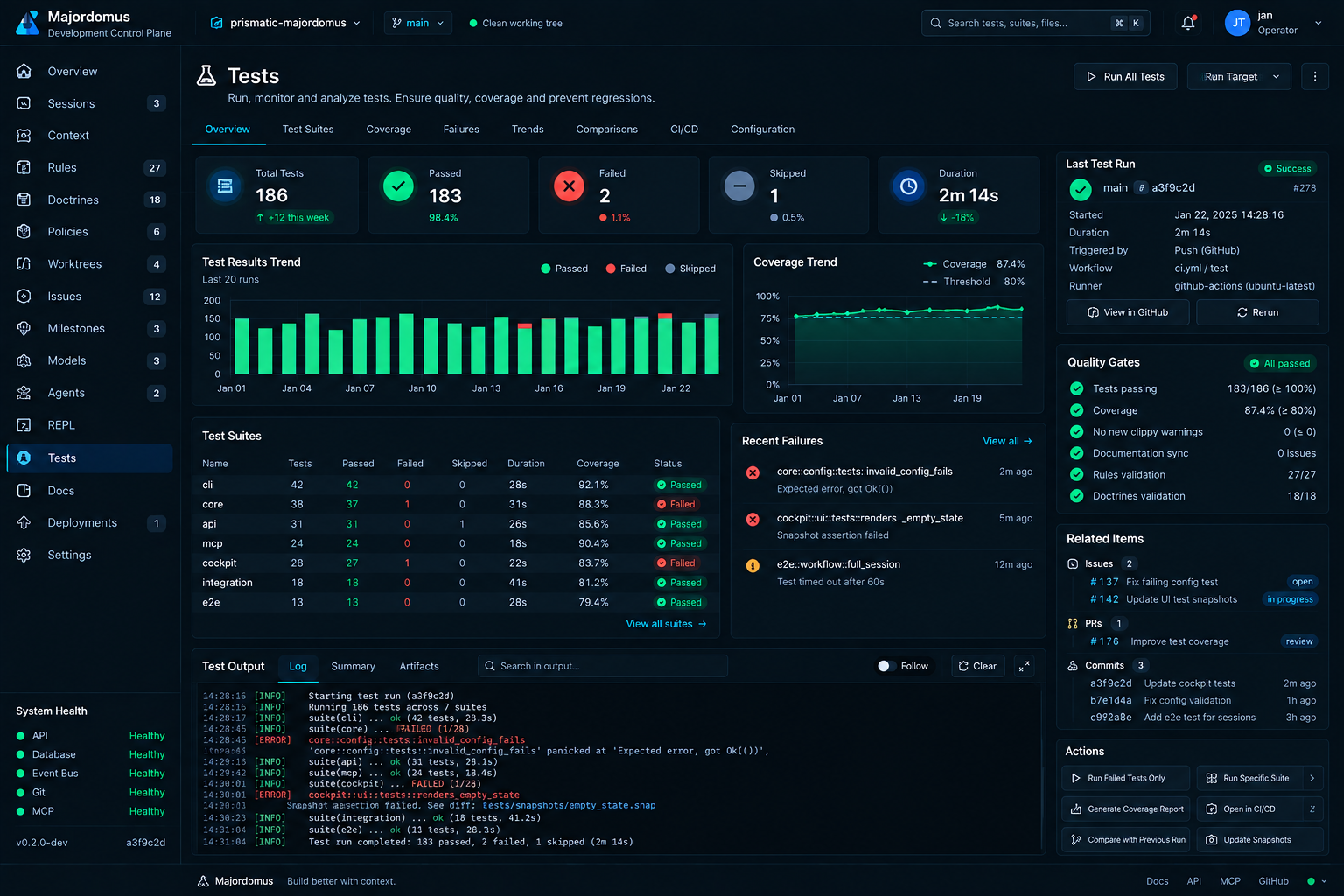
Tests Test runs, failures and quality gates in one place, linked to issues and commits.
-
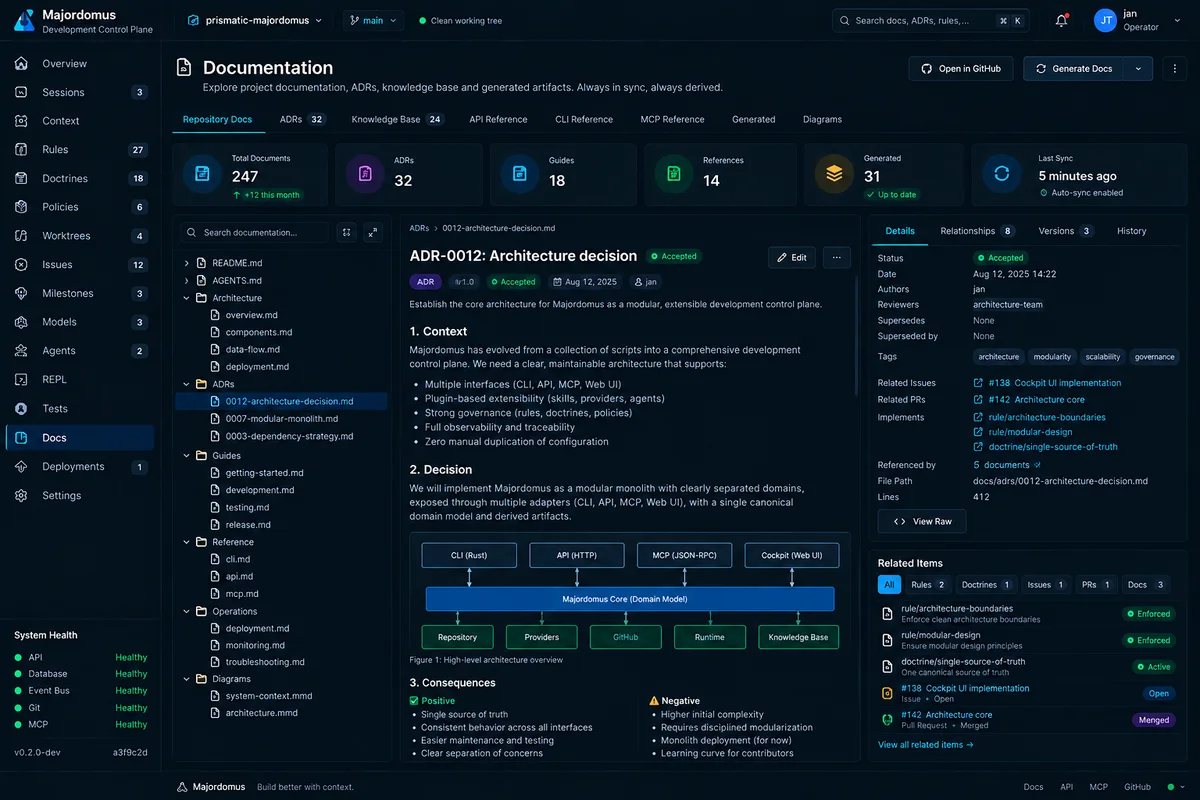
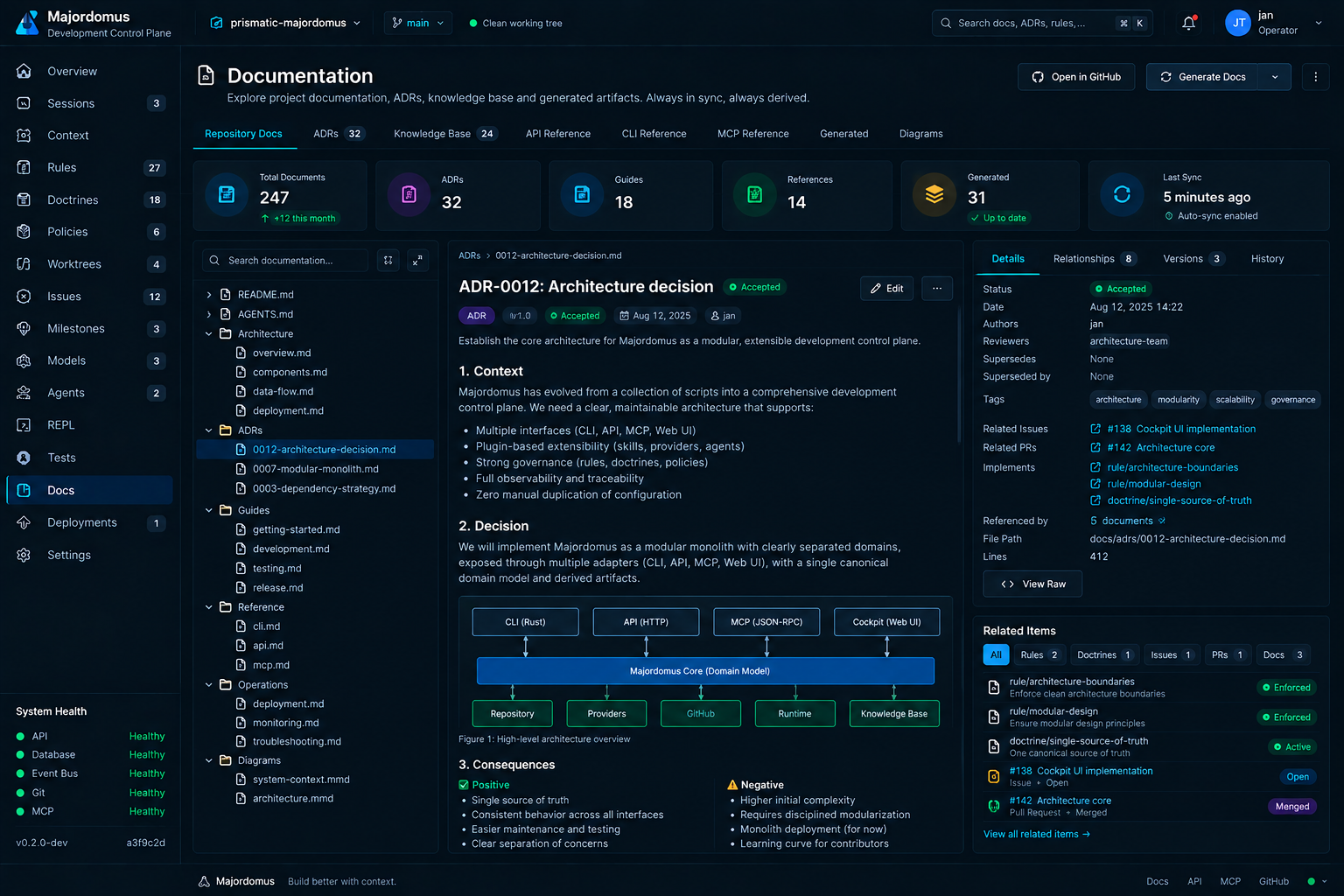
Documentation Documentation and architecture decisions next to the rules they implement.
-
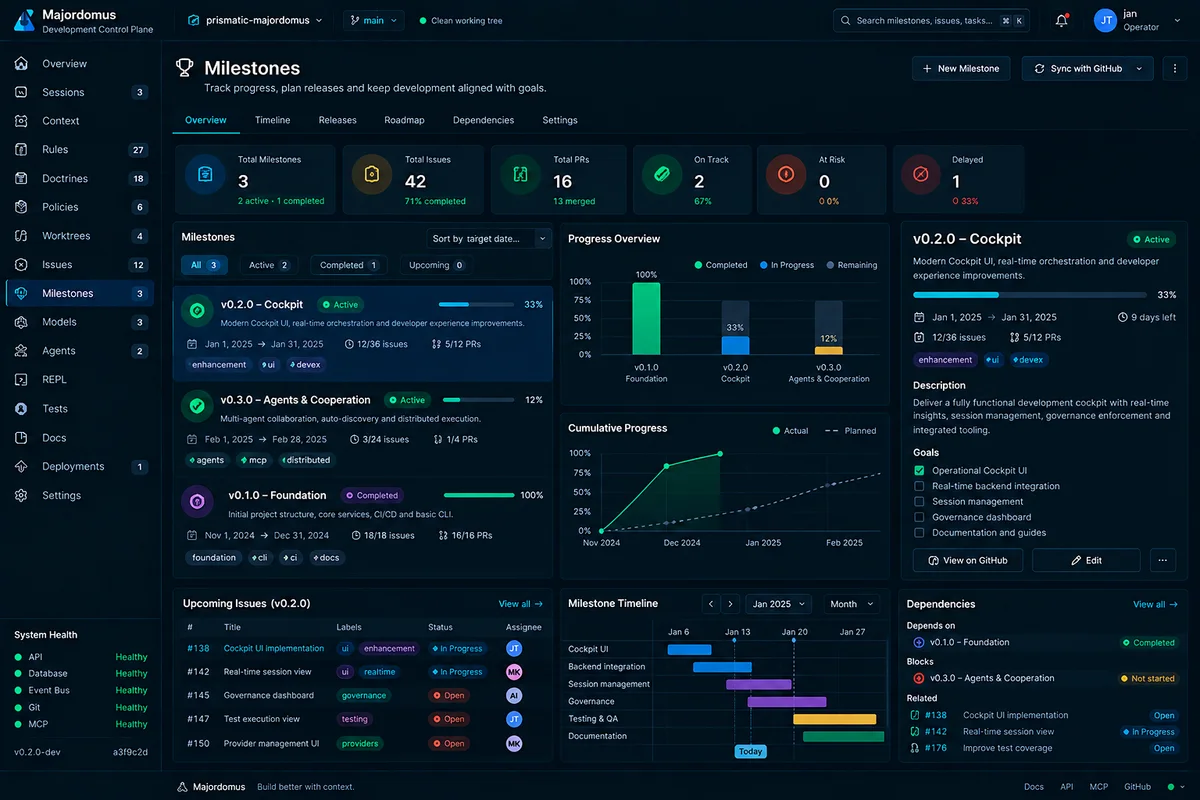
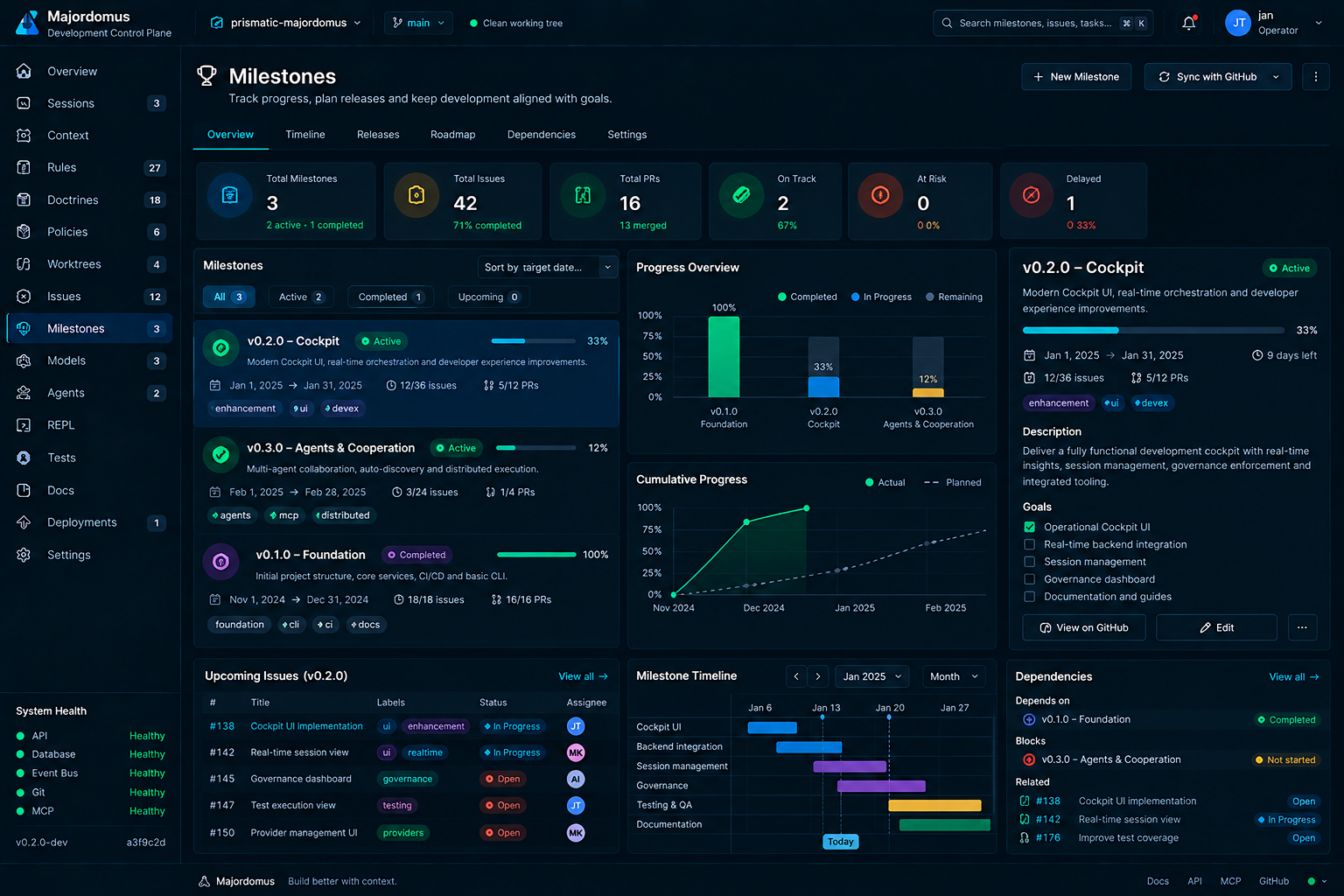
Milestones Milestones with progress, schedule and dependencies derived from the issue plan.
-
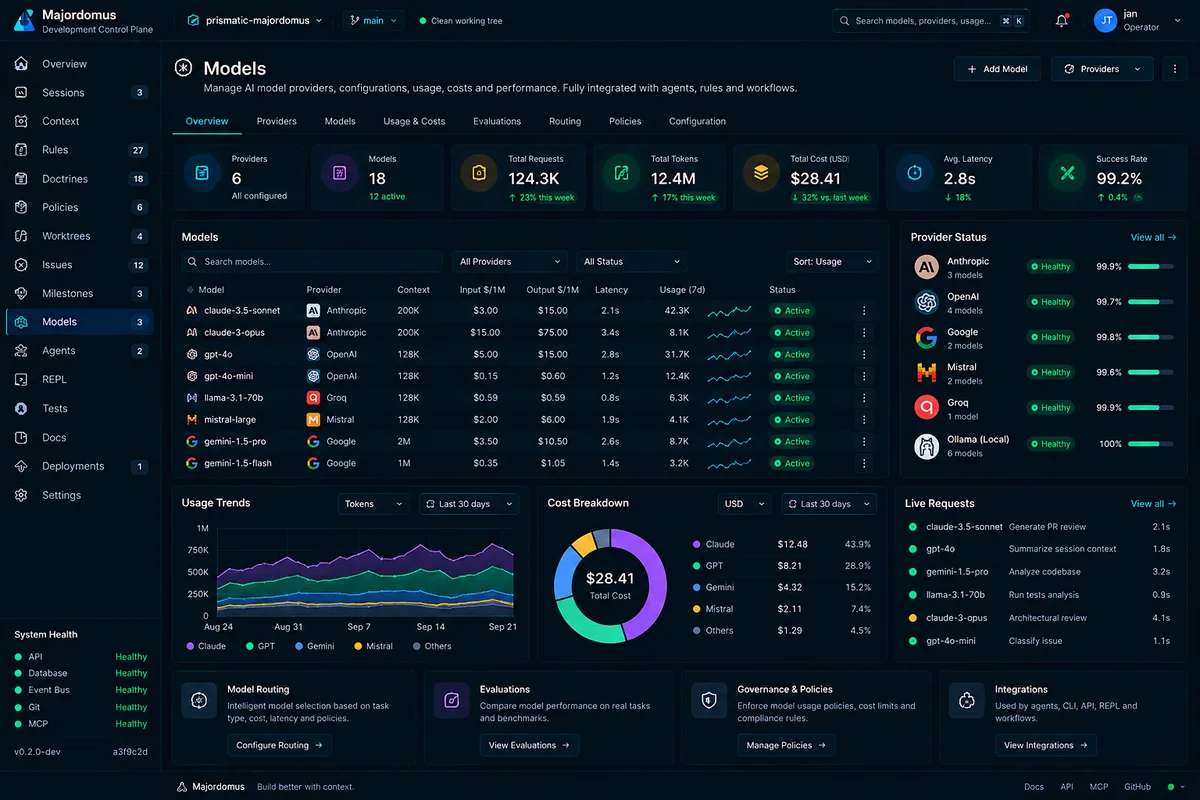
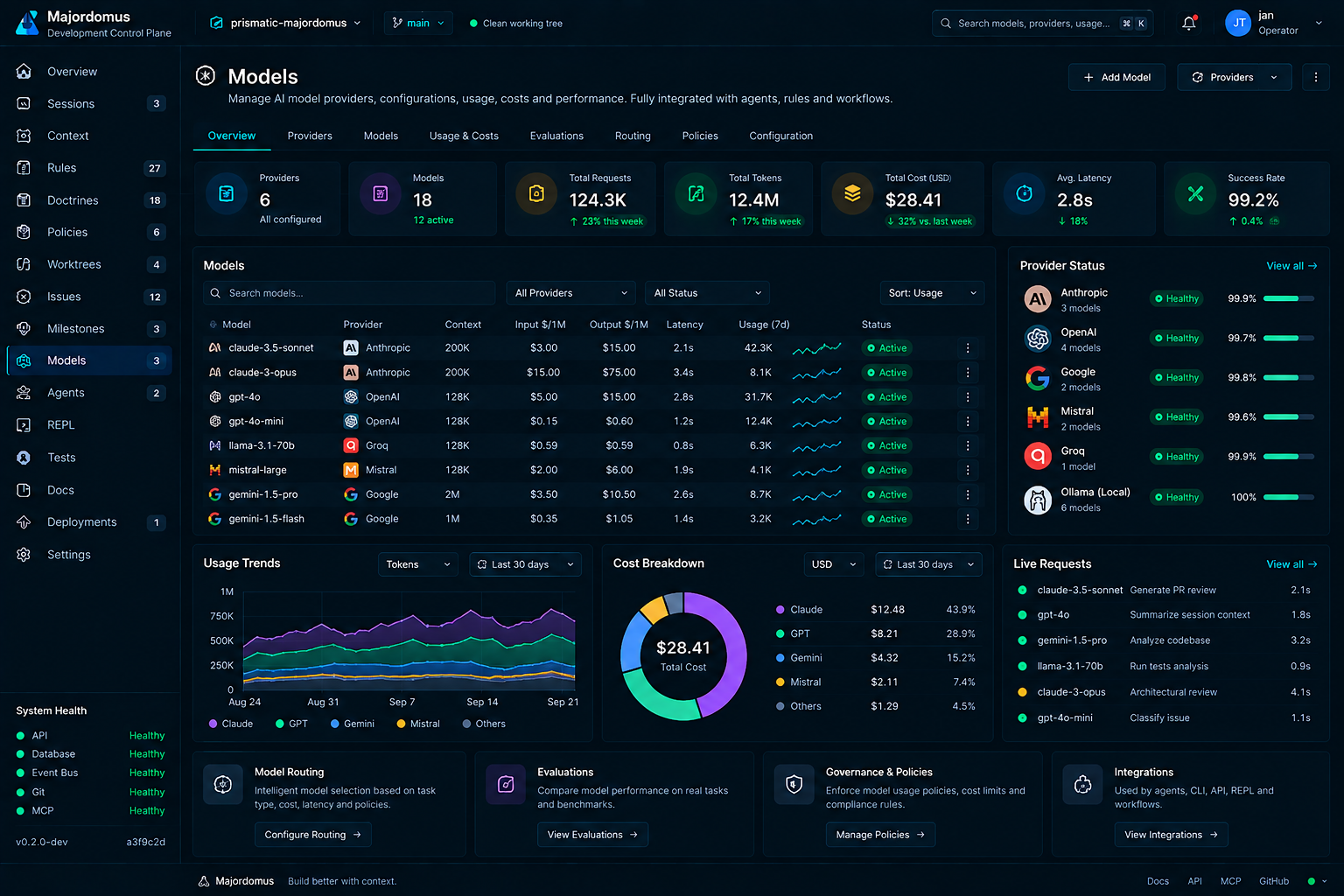
Models Which models were used for what, at what latency and cost.
What was built
The site is a bilingual static publication generated with Zola, deployed to GitHub Pages and verified against the live URL on every change. It was produced in a single working session by an AI coding agent (Claude Code) directed by one person, with Majordomus as the supervisory layer between the agent and the repository.
This note documents that process with the same standard the research notes apply to psychology: report what was measured, separate it from interpretation, and state what cannot be concluded.
The recorded timeline of the first release
All times are UTC on 14 September 2026 and come from the Git history, the GitHub API, the Majordomus ledger and the pipeline records.
| Time | Event | Source |
|---|---|---|
| 09:45 | Working session begins with the poster rebuild | local file timestamps |
| 09:54:06 | GitHub repository created; poster committed | GitHub API, Git |
| 10:26:23 | Majordomus layer initialised; first supervised task started | Majordomus ledger |
| 10:29:16 | Scope drift reported after files were moved; task restarted | Majordomus ledger |
| 10:39:39 | A malformed scope reported by the pre-push check; task restarted before any push | Majordomus ledger |
| 10:42:45 | Site committed; the pre-commit hook ran the Majordomus health check with zero failures | Git, hook output |
| 10:43:02–10:45:45 | Pages pipeline: 7 jobs, 2 minutes 43 seconds, all passed | GitHub Actions |
| 10:45:42 | Release v0.1.0 published after live verification | GitHub API |
| 10:47:25 | Task closed as completed; verification command was the live smoke test (exit 0, 7 seconds) | Majordomus ledger |
Derived durations:
- repository creation to first verified release: 51 min 36 s
- Majordomus initialisation to first verified release: 19 min 19 s
- push to verified release: 2 min 57 s
At that release the site was checked by 7 validation stages and 30 browser tests. Later phases (link previews and structured data, then this research library and the advice library) followed the same loop and are visible in the repository’s release history.
The kinds of instructions
The work was driven by about fifteen messages from one person. They fell into five types:
- A one-line request to create a project on GitHub.
- Art direction for the poster, followed by a choice between three offered approaches.
- Structured execution briefs. Three long specifications of increasing scope: a static artwork page, an interactive microsite, and a multilingual publishing system with dozens of numbered requirements and an explicit completion gate.
- Short directives during work: deploy, validate in a browser, release automatically, use Majordomus and enforce it.
- Editorial direction: apply HTML5 Boilerplate practices, improve link previews and search visibility, and replace promotional copy with serious, sourced psychology.
None of these messages specified implementation details such as template syntax or test cases. Those were decisions of the agent, and the supervision layer’s job was to keep them checkable.
What Majordomus contributed
Majordomus did not write code. It constrained and recorded the work:
- Scoped tasks. Every change ran as a task with declared paths. When files were moved outside that scope,
majordomus watchreported drift, and the task was restarted with a correct scope. When a later scope was malformed,majordomus checkreported every file as out of scope before the push, which would otherwise have been refused by the pre-push hook. - A health check on every commit.
majordomus doctorruns in the pre-commit hook. Before the first commit it reported that the README did not link the agent bootstrap file; the defect was fixed before it reached the repository. - A finish contract.
majordomus finishrefuses to close a task as completed unless its verification command passes. For this site that command is the live smoke test, so “completed” means “deployed and checked”, not “written”. - Continuity. Checkpoints and handovers recorded the current state and the next action whenever a task was restarted, so each restart took seconds and depended on recorded facts rather than on the agent’s memory.
- Rules in the repository. Project rules such as “no deployment claim without live verification” live in
.ai/repo/rules/, next to the code they govern.
Did it make development faster?
The honest answer is that no speed-up factor can be stated. There was one session and no comparable session without supervision, so there is no control condition.
What the records do show is where time was not lost. No push was rejected by CI, no deployment had to be rolled back, and the first pipeline run passed all seven jobs. Three defects (two scope errors and a documentation bootstrap failure) became local findings instead of failed pipeline runs. Each would have cost at least one additional push-and-wait cycle of several minutes, and a failed deployment would have cost more.
The larger effect is on confidence rather than raw speed. Every “done” in this project is backed by a recorded command and its exit code, which a reader can check with majordomus history in the repository.
Limits of this account
- The timeline starts at the first recorded file; planning that happened before it is not included.
- Durations depend on the tools, the hardware and network latency of this session.
- The session also relied on conventional safeguards unrelated to Majordomus, including local validation, browser tests and continuous integration. Their effects are not separated here.
Claims made on this page
Each claim is graded in the evidence ledger, with its sources and review dates. Evidence →
The build timeline in the method note, including 51 min 36 s from repository creation to the first verified release, is taken from Git, GitHub, pipeline and Majordomus records, and no speed-up factor is claimed because there was no control condition.
- Scope
- One working session on 14 September 2026.
- Caveat
- Planning before the first recorded file is excluded, and durations depend on tools, hardware and network latency.
Last reviewed · Review due · build-timeline-from-records